
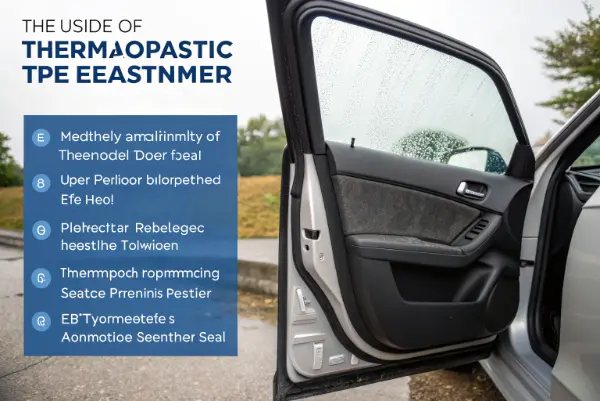
Car leaks are a huge problem. You hear wind noise, and rain gets inside your car. Bad seals upset your customers and hurt your brand. You need better materials to fix this fast.
Thermoplastic Elastomer (TPE) is a great choice for automotive sealing systems. It resists bad weather, harsh UV rays, and strong chemicals like car oils. TPE stays flexible in cold winters and keeps its shape in hot summers. This material replaces old rubber to stop leaks, reduce road noise, and make cars lighter. TPE seals last longer and keep cars safe and dry.
I remember my early days working in a mold factory. We used old rubber for car door seals. The rubber got hard in the sun and cracked after a year. Customers complained about water leaking into their new cars. This problem kept me awake at night. I knew we needed a material that could handle sun, rain, and oil without breaking down. That is when I found TPE. It changed everything for my business and my clients. Let us look at why TPE is the best answer for your car seals.
Why do TPE seals survive harsh outdoor weather and UV exposure?
Sunlight destroys bad rubber seals. The UV rays bake the material until it cracks. Water then leaks into the car and ruins the inside. You lose money replacing parts.
TPE seals handle harsh outdoor weather very well. The material has excellent resistance to UV radiation and ozone. TPE does not dry out, crack, or fade in the bright sun. It keeps its elastic stretch for years. This makes it perfect for exterior weather strips, window borders, and door gaskets.
The Secret to UV Resistance
TPE materials are built differently than old rubber. The chemical bonds inside TPE block UV rays from the sun. Think of it like sunscreen for your car parts. When I started my trading company, a client named Michael came to me. He made plastic parts for cars. His old window seals turned gray and cracked in the California sun. I told him to switch to a weatherproof TPE grade. His new window seals stayed black and soft for years. His customers stopped complaining.
Why TPE Beats Traditional Rubber in Weather
Old rubber breaks down fast when exposed to air and sun. TPE lasts much longer with less damage. You do not have to replace TPE seals often. This saves a lot of money over time. Let us look at a simple comparison between TPE and old rubber.
| Feature | Weatherproof TPE | Traditional Rubber |
|---|---|---|
| UV Resistance | Very High. Blocks sun damage. | Low. Cracks in the sun. |
| Ozone Resistance | Excellent. Does not break down. | Poor. Dries out fast. |
| Lifespan in Sun | 10+ years without cracking. | 2 to 4 years before cracks show. |
| Color Fading | Stays black and shiny. | Turns dull and gray. |
Staying Flexible in Extreme Weather
Weather is not just about the sun. Cars face freezing snow and freezing rain. TPE stays very flexible at low temperatures. If you live in a cold place, your car doors will still shut tight. The seal will not freeze solid. TPE also has great compression set recovery. This means if you smash the seal in a door, it bounces right back to its original shape. Good elastic bounce helps the seal keep tight contact pressure. This stops wind and rain from getting inside.
Can TPEs handle automotive fluids and extreme temperatures?
Oil and gas leak under the car hood. These harsh chemicals melt cheap plastic seals. A melted seal causes engine problems. You need a seal that fights off chemicals.
TPEs are highly chemical resistant. Special grades of TPE and TPV can withstand exposure to motor oil, grease, and automotive fluids. They also handle very high engine heat. This makes TPE perfect for under-the-hood sealing points, air-filter seals, and parts that touch fluids.
Fighting Oil and Grease
Under the hood of a car is a harsh place. Engines get very hot. Oil and grease fly everywhere. Normal rubber swells up and gets mushy when oil touches it. TPE does not do this. Chemical resistance is a big strength of special TPE blends. They block the oil from soaking into the plastic. I had a client making air-filter seals. His old seals melted from engine heat and oil vapor. We switched his molds to use a TPV material. TPV is a strong type of TPE made for heat and chemicals. His filter seals stopped melting.
TPV vs EPDM for Chemical Exposure
When you need to block strong fluids, you must choose the right material. People often ask me if they should use TPV or EPDM rubber. Both are good. But they act differently. TPV gives you the power of rubber but molds like plastic. EPDM is an old kind of rubber. Sometimes EPDM is better for very extreme fluids. But TPV is much easier to make in a factory.
| Material | Chemical Resistance | Heat Resistance | Factory Molding |
|---|---|---|---|
| TPV (TPE type) | Very Good against oils and grease. | High. Good for engines. | Very easy and fast to mold. |
| EPDM Rubber | Excellent against many harsh fluids. | Very High. | Slow and hard to mold. |
| Standard TPE | Good for light water and soap. | Medium. Good for car doors. | Very easy and fast to mold. |
The Importance of Heat Resistance
TPE and TPV handle high heat well. They do not melt when the engine runs hot for hours. The seal keeps its shape. If the seal loses its shape, hot air escapes. This ruins engine efficiency. By using a chemical and heat resistant TPE, you make sure the car runs well. You also save money because TPE is fast to mold in a factory. You can pump out thousands of parts a day. This is why many business owners like Michael love TPE for car parts.
How do TPE seals improve vehicle comfort and efficiency?
A noisy car ride makes people angry. Heavy car parts waste expensive gas. You want a quiet car. You also want to save gas money.
TPE seals provide superior noise reduction and thermal insulation in vehicles. TPE fits tightly to block wind and road sounds. Also, TPE is very lightweight compared to thick rubber. This lightweight nature lowers the overall weight of the car, which improves fuel efficiency and lowers emissions.
Blocking Wind and Road Noise
Nobody likes a loud car. When you drive fast on the highway, wind hits the doors. If the door seal is bad, the wind whistles right into your ear. TPE offers superior sealing properties. It fills every tiny gap in the car door. The tight fit blocks the wind. It also blocks the sound of the car tires hitting the road. I love a quiet car. When I upgraded the seals on my own truck to TPE, the inside became silent. It felt like a much more expensive truck. TPE also acts as thermal insulation. It keeps cold air out in the winter. It keeps hot air out in the summer. Your car heater and air conditioner do not have to work as hard.
Making Cars Lighter
Weight is a big deal for cars today. Heavy cars burn more gas. Burning more gas creates more pollution. TPE is a very lightweight material. It weighs much less than old thick rubber. When you put TPE seals on all four doors, the trunk, and the windows, you save a lot of weight.
| Benefit | How TPE Helps | Result for Driver |
|---|---|---|
| Less Weight | Replaces heavy rubber parts. | Better gas mileage. Saves money. |
| Tight Fit | Bounces back to fill gaps perfectly. | Quiet ride. Blocks wind noise. |
| Good Insulation | Blocks hot and cold air transfer. | Cabin stays comfortable faster. |
| Lower Emissions | Light cars need less engine power. | Cleaner air for the planet. |
Better for Electric Vehicles
Electric cars need to be very light. If an electric car is heavy, the battery dies fast. TPE seals are perfect for electric cars. They help the battery last longer by saving weight. Also, electric cars do not have loud engines. You can hear the wind noise much more. TPE blocks that wind noise. This is why almost all new electric cars use TPE weatherstripping. It makes the car light, quiet, and highly efficient.
Why is manufacturing with TPEs better for the future?
Factories throw away too much plastic scrap. Making car parts takes too many steps. You waste time gluing parts together. You need a faster and greener way to work.
TPEs are fully recyclable, which supports automotive sustainability. You can melt factory scrap and use it again. TPEs also co-extrude easily with other plastics like polypropylene (PP). This lets you mold hard and soft parts together in one step without messy glue.
Saving the Planet with Recyclable TPE
Old rubber is a nightmare for the planet. Once you cook rubber, you cannot melt it again. If you make a bad rubber part, it goes to the trash. TPE is different. TPE is a thermoplastic. This means you can heat it, melt it, and shape it again and again. The recyclability of TPEs is amazing. When I run my molding machines, we always have leftover plastic scrap. We grind up the TPE scrap. We put it right back into the machine. We waste zero material. This saves my clients a lot of money. It also keeps plastic out of the dirt. Car companies love this. They all want to build green cars today.
The Magic of Co-Extrusion
Car seals often need two parts. They need a hard plastic spine to clip onto the metal car door. They need a soft rubbery lip to squish against the window. In the past, you had to make the hard part. Then you made the soft part. Then you glued them together. The glue often failed.
TPE solves this with co-extrusion. You can push hard Polypropylene (PP) and soft TPE into the mold at the same time. The TPE bonds right to the PP. They stick together perfectly. No glue is needed.
| Manufacturing Step | Old Rubber Method | Modern TPE Method |
|---|---|---|
| Making the Parts | Bake rubber for a long time. | Fast injection molding. |
| Joining Materials | Use messy chemical glue. | Co-extrusion. Melts together. |
| Handling Scrap | Throw bad parts in the trash. | Grind and melt them again. |
| Custom Needs | Hard to change the recipe. | Easy to custom-formulate. |
Custom Blends for the Future
TPE is easy to change. TPEs can be custom-formulated to meet your exact needs. If you need a softer seal, we just change the TPE recipe. If you need it to survive in the desert, we add more UV blockers. New TPE developments focus on making the material even better for extreme weather. As a business owner, this gives you total control. You get the exact part you want. You get it faster. You make less trash.
Conclusion
TPE materials are the best choice for car seals. They fight off sun damage, cold ice, and harsh engine oils. TPE blocks loud wind noise and saves gas by being very light. You can melt and reuse TPE, saving money and the earth. Upgrading to TPE keeps cars dry, quiet, and running smoothly for many years.