
Are you trying to launch a new product but find the cost of traditional mass-production molds overwhelming? You need real, high-quality plastic parts for market testing or a niche audience, but the massive upfront investment feels like a huge risk. This situation often leaves great ideas on the drawing board, stuck between a prototype and a full-scale launch. What if you could get production-quality parts faster and more affordably?
Low-volume injection molding can bridge the gap between prototypes and full production, but the right route depends on more than annual quantity. Tooling investment, part geometry, resin, appearance, tolerance, repeatability, launch timing, inventory and future demand all matter. A low-volume decision is strongest when it compares molded output with machining, printing, urethane casting, rapid tooling and a production tool using the same acceptance criteria.
Related engineering resources: low volume injection molding | rapid tooling | prototype injection molding
Low-volume injection molding is a manufacturing process designed to produce parts in quantities typically ranging from 500 to 100,000 units. It uses more cost-effective tooling, often made from softer metals like aluminum, to reduce upfront costs and shorten lead times. This makes it the suitable solution for bridge production, market testing, custom parts, and products with shorter life cycles. It allows you to get your product to market faster, validate your design with real users, and manage inventory more effectively without committing to mass production.
When Should You Consider Low-Volume Injection Molding?
You have a finalized design, but you’re not quite ready to hit the “go” button on a hundred-thousand-part run. You might worry about committing a huge budget before you have real market feedback. This uncertainty can be paralyzing, delaying your launch and giving competitors a chance to catch up. The fear is that you’ll invest in expensive tooling only to discover you need to make a critical design change.
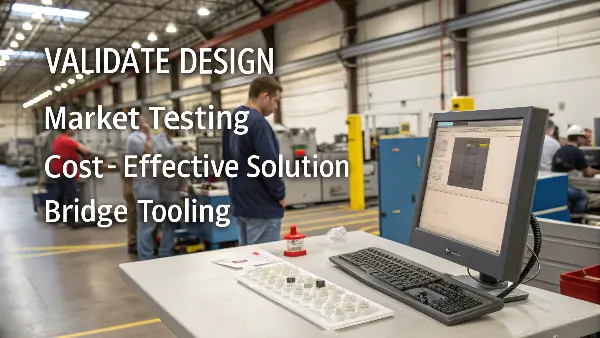
You should consider low-volume injection molding when you need to validate your design with real production-grade materials, get your product to market quickly, or serve a niche customer base. It’s ideal for bridge tooling, which fills the gap while high-volume molds are being made. It’s also suitable for market testing, allowing you to gather user feedback before committing to a massive inventory. Furthermore, it’s a cost-effective choice for products with limited demand, such as custom medical devices or specialized industrial equipment.
Deciding on the right manufacturing path is one of the most critical choices you’ll make. Project teams should think about their immediate and medium-term goals. Low-volume molding isn’t just a cost-saving measure; it’s a powerful strategic tool.
Let me break down the specific scenarios where it shines:
Key Applications for Low-Volume Molding
- Rapid Prototyping: While 3D printing is great for early concepts, you eventually need prototypes made from the final production material. Low-volume molding lets you create a small batch of parts that have the exact mechanical properties and surface finish of your final product. This is crucial for functional testing and investor demos.
- Bridge Production: Building a high-volume, hardened steel mold can take months. What do you do in the meantime? Bridge tooling allows you to start production and sales almost immediately, generating revenue and market presence while the mass-production tool is being prepared. It keeps your momentum going.
- Market Validation: You think you have a winning product, but the market will be the ultimate judge. Producing a run of 1,000 to 5,000 units lets you test the waters. You can get real feedback, refine your marketing, and confirm demand before scaling up. This data-driven approach dramatically lowers your risk.
- Niche & Custom Products: Not every product needs to sell millions of units. Industries like medical devices, aerospace, and custom electronics often require high-quality parts in smaller quantities. Low-volume molding makes these projects economically viable.
Thinking through these scenarios helps clarify if this is the right path for you. It’s about matching the production method to your business strategy.
How Do Molds for Low-Volume Production Differ from High-Volume Molds?
Many business owners think “injection molding” is a one-size-fits-all process. They get a quote for a tool and are shocked by the price, not realizing that the quote might be for a mold designed to last for a million shots. This misunderstanding can lead them to believe their project is not feasible, creating a frustrating roadblock. They need a tool that matches their production volume, not one that’s over-engineered for a future that may not come.
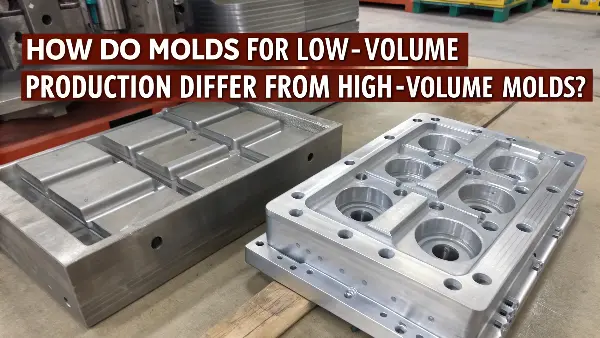
Molds for low-volume production are typically made from softer, easier-to-machine materials like aluminum or P20 steel, whereas high-volume molds use hardened tool steels like H13 or S136. This material difference drastically reduces the cost and time needed to create the tool. Low-volume molds are designed for durability up to 100,000 cycles, while high-volume molds are built to withstand a million or more cycles. The design of the low-volume tool is also simplified, often omitting complex cooling channels or multi-cavity setups to further control costs.
Understanding these differences is key to making an informed decision. Here’s a simple comparison:
Mold Material & Design Comparison
| Feature | Low-Volume Mold | High-Volume Mold |
|---|---|---|
| Material | Aluminum (e.g., 7075), Pre-hardened Steel (e.g., P20) | Hardened Tool Steel (e.g., H13, S7, S136) |
| Lifespan (Cycles) | 500 – 100,000+ | 100,000 – 1,000,000+ |
| Tooling Lead Time | 2-5 weeks | 6-12+ weeks |
| Upfront Cost | Low | High (can be 3-5x more than low-volume) |
| Design Complexity | Simpler, often single cavity, simplified cooling | Complex, often multi-cavity, optimized cooling systems |
| Ideal Use Case | Prototyping, bridge production, niche markets | Mass production, long-term product lines |
The main takeaway here is that you shouldn’t pay for what you don’t need. If your business plan calls for 20,000 units in the first year, investing in a million-shot mold is an inefficient use of capital. A well-made aluminum or P20 steel mold will deliver excellent quality parts for your entire production run and get you to market months earlier.
What Are the Real Cost Benefits of Choosing Low-Volume Molding?
When you’re trying to get a project off the ground, every dollar counts. You look at the high cost of traditional tooling and it feels like an insurmountable barrier. The focus on per-unit price can be misleading, causing you to overlook the massive upfront investment that drains your cash flow. This financial pressure can force you to make compromises on design or marketing, or even shelve the project entirely.
The primary cost benefit of low-volume molding is the dramatically lower upfront tooling investment, which can be 50-70% less than a high-volume mold. This frees up crucial capital for other business needs like marketing or inventory. Secondly, it enables “just-in-time” manufacturing, reducing the need for expensive warehousing and minimizing the risk of holding obsolete stock if a design change is required. Finally, it allows for quicker design iterations, saving you from costly modifications to a hardened steel mold later in the process.

Deeper Dive into Cost Savings
- Tooling Amortization: The mold cost, or tooling, has to be spread across the number of parts you produce. With a high-volume tool, you need to sell tens of thousands of units just to break even on the mold cost. For a low-volume tool, the break-even point is much lower. This makes your project profitable much sooner.
- Reduced Waste & Risk: Imagine you produce 100,000 units and then discover a design flaw or a shift in market preference. You’re now stuck with a mountain of useless inventory. Low-volume runs protect you from this. You can produce in smaller batches, incorporate feedback, and adapt quickly. This agility is a massive competitive advantage.
- Faster Return on Investment (ROI): Because you’re spending less upfront and getting to market faster, your path to profitability is accelerated. The money you invest starts generating returns sooner, improving the overall financial health of your project.
The “cost per part” isn’t the only number to look at. You have to consider the total cost of bringing your product to market, including the risk. Low-volume molding fundamentally changes that equation in your favor.
What Common Mistakes Should You Avoid When Choosing a Supplier?
You’ve decided low-volume molding is the way to go. You start searching for suppliers, but everyone seems to promise the same thing: low prices and fast turnarounds. You might be tempted to just pick the cheapest quote, thinking a mold is a mold. This is a dangerous assumption. Choosing the wrong partner can lead to poor-quality parts, missed deadlines, and endless frustration, completely negating the benefits you were seeking.
The most common mistake is choosing a supplier based solely on the lowest price. A cheap quote can hide poor engineering, inferior mold materials, or a lack of quality control, leading to higher costs in the long run. Another error is providing unclear or incomplete design files (CAD), which causes delays and misinterpretations. Finally, failing to discuss the supplier’s project management and communication process can result in a lack of transparency and a frustrating experience. Generally prioritize expertise and communication over a rock-bottom price.
This is where my slogan, “Master Molding Right,” really comes from. It’s not just about cutting steel; it’s about engineering a solution. I’ve had many clients come to me after a bad experience elsewhere. They bring me a faulty mold or out-of-spec parts from a supplier who cut corners. We often have to start over, which costs them more time and money than if they had chosen a skilled partner from the beginning. A good supplier is an investment, not an expense.
To help you avoid these pitfalls, here’s what you need to scrutinize when evaluating a partner:
Supplier Vetting Checklist
- Ask for Case Studies: Don’t just look at pictures of parts. Ask for detailed case studies of projects similar to yours. How did they solve challenges? What materials did they use? A good supplier will be proud to share their success stories and demonstrate their problem-solving skills.
- Verify Their Engineering Process: A top-tier supplier will perform a detailed Design for Manufacturability (DFM) analysis before they even start making the mold. This report should identify potential issues with your design—like undercuts, wall thickness, or draft angles—and suggest improvements. A supplier who skips this step is a major red flag.
- Inquire About Mold Materials: Ask them specifically what grade of aluminum or steel they plan to use for your tool. A vague answer like “aluminum” isn’t good enough. Are they using 7075 for higher durability or a cheaper 6061? Their material choice tells you a lot about their commitment to quality.
- Understand Their Communication Protocol: How will they keep you updated? Will you have a dedicated project manager? How often can you expect progress reports? Clear, consistent communication is the backbone of a successful project. Make sure you feel comfortable with their process before you commit.
Choosing the right supplier is about finding a true partner who will guide you through the process, not just a factory that takes your order.
Convert Demand Into a Real Volume Scenario
Estimate current order, forecast range, lifetime quantity, variants, scrap allowance and likely engineering changes. A tool that fits today’s 500 parts may be poor if demand becomes 20,000; a full production tool may be wasteful if the design will change after launch.
Match Tooling to Risk and Part Requirements
Aluminum, soft tooling, modular inserts, single-cavity steel and multi-cavity tools serve different needs. Choose the simplest architecture that meets material, finish, tolerance, cycle and life. Add mechanisms only when the part function requires them, because complexity raises maintenance and trial risk.
Consider Resin and Functional Validation
Low volume does not justify an unrepresentative material if the part carries load, seals, sees heat or interfaces with another component. Mold the intended resin where possible and test dimensions, assembly, appearance and use performance. Short runs still need traceability and a process window.
Compare Lead Time With Rework and Inventory
A faster soft tool may reduce launch delay, but early scrap, manual trimming, inspection and replacement can erase the schedule advantage. Compare first good part, stable output, engineering-change flexibility and inventory exposure—not just time to first sample.
Plan the Exit Route
Define whether the low-volume tool is a bridge, a long-term asset or a learning tool. Record cavity, surface, cooling, wear and process data so the next tool can reuse what worked. A clear volume or quality trigger should start the move to durable production tooling.
Is Low-Volume Injection Molding Right for Your Project: Buyer Review Checklist
- Model current, forecast, lifetime, variants, scrap and engineering-change volume.
- Select tooling architecture from material, finish, tolerance, cycle and life.
- Use representative resin and validate function even for a short run.
- Compare first-good-part time, stable output, rework, inspection and inventory.
- Define whether the tool is a bridge, long-term asset or learning platform.
Frequently Asked Questions
What quantity makes low-volume injection molding worthwhile?
There is no fixed threshold. Tool cost, part price, material, geometry, quality, schedule, expected changes and lifetime demand determine the break-even point.
Can low-volume tooling use the final production material?
Often yes and it should when function matters, but the tool, drying, cycle and validation plan must support the material’s requirements.
Conclusion
Low-volume injection molding is more than just a production method; it’s a strategic advantage. It lowers financial barriers, accelerates your time-to-market, and provides the flexibility to adapt and innovate. By allowing you to produce high-quality, end-use parts without the massive commitment of traditional tooling, it empowers entrepreneurs and established businesses alike to launch new products with confidence and less risk.