
You have a brilliant idea for a new plastic product and even a 3D-printed prototype in your hand. But turning that concept into thousands of market-ready parts feels like a huge, confusing leap. The technologies for prototyping and mass production are completely different, and a design that works on a 3D printer can fail spectacularly in an injection mold, leading to costly delays and redesigns. Understanding how to bridge these technologies is the key to a smooth and successful product launch.
The most efficient plastic product development path rarely uses one prototyping technology from concept to production. Teams may move from printed fit models to CNC interfaces, SLA appearance samples, cast functional parts, rapid tooling and finally production injection molding. The bridge works when each stage has a clear question, preserves important datums and records what the next method must revalidate.
Related engineering resources: prototype injection molding | rapid tooling | production injection molding
Bridging the gap from prototype to production requires a strategic approach. Start with a technology like 3D printing for initial validation. Then, critically refine your design for manufacturability (DFM) before investing in tooling. For production, choose the right mold technology—like rapid tooling for smaller runs or hardened steel molds for mass production. This phased approach ensures your design is viable, cost-effective, and ready for scale, preventing expensive mistakes down the line.
What’s the Best Way to Start Prototyping Your Plastic Part?
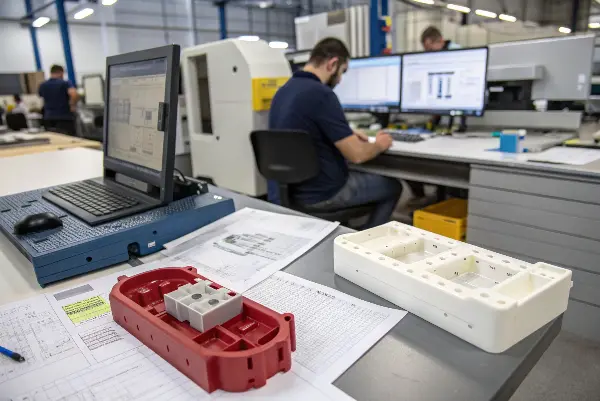
You need a physical model to test your idea, but the options are overwhelming. Should you use 3D printing, CNC machining, or something else? Choosing the wrong method can be a waste of time and money. You might get a prototype that doesn’t accurately represent your final product’s look, feel, or function, leading to bad feedback and flawed testing. The key is to match the prototyping technology to your specific goal at that stage, whether it’s visual confirmation, functional testing, or a fit check.
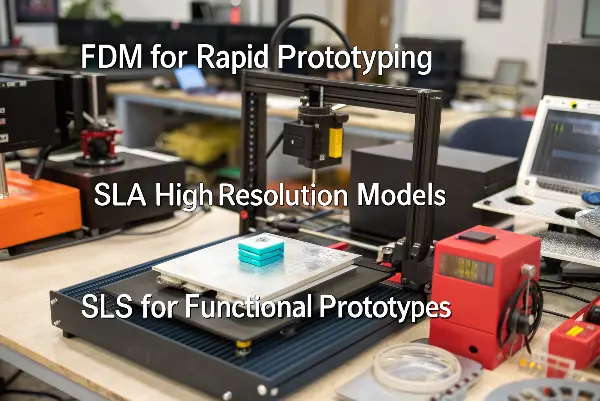
The best way to start is with Fused Deposition Modeling (FDM) 3D printing for quick, low-cost form and fit checks. As you refine the design, consider Stereolithography (SLA) for higher-resolution cosmetic models or Selective Laser Sintering (SLS) for functional prototypes with good mechanical properties. For prototypes that need the exact material properties of the final part, CNC machining a block of plastic is an excellent, though more expensive, option. The right choice depends entirely on what you need to learn from the prototype.
Matching Technology to Your Goal
The purpose of your prototype dictates the best technology. Don’t pay for high precision if you just need to check the size.
| Prototyping Goal | Recommended Technology | Why It’s a Good Fit |
|---|---|---|
| Early Concept & Size Check | FDM 3D Printing | Very fast and cheap. Suitable for quickly getting a feel for the part’s ergonomics and basic dimensions. |
| High-Detail Visual Model | SLA 3D Printing | Produces a very smooth, high-resolution surface finish. Ideal for marketing photos or investor presentations. |
| Functional Testing (Snaps, Hinges) | SLS 3D Printing or CNC Machining | SLS offers durable, strong parts without support marks. CNC can machine the part from the final production plastic, giving you the truest functional test. |
| Pre-Production Material Test | CNC Machining or Urethane Casting | CNC gives you a part in the exact target material. Urethane casting can create a small batch of high-quality parts that mimic injection molding. |
Start simple and cheap with FDM. Get the basic shape right. Then, as your design gets more serious, invest in more advanced prototypes to validate specific features like functionality or appearance. This stepped approach saves money and gives you the right feedback at the right time.
How Do You Move From a 3D-Printed Prototype to a Mold-Ready Design?
You’ve perfected your 3D-printed prototype. It looks great and works as intended. But now you face the critical step of preparing it for injection molding. This transition is where many projects stumble. A design that is easy to 3D print can be impossible or incredibly expensive to mold, leading to frustrating and costly redesigns right when you’re ready to launch. You need a process to bridge this gap effectively. Thinking about molding from the start is the only way to ensure a smooth transition.
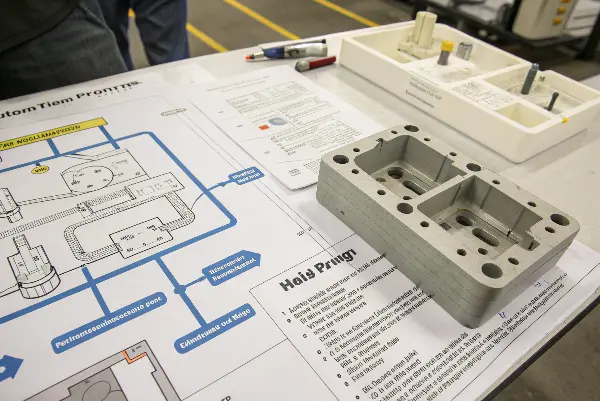
To move from a prototype to a mold-ready design, you must apply Design for Manufacturability (DFM) principles. This involves adding draft angles, ensuring uniform wall thickness, incorporating radii on corners, and planning for ejector pin locations. Work closely with your mold maker to review the design. They will identify potential issues like undercuts, sink marks, or areas that could trap air. This collaborative review is essential for optimizing your part for efficient, high-quality, and cost-effective mass production.
Key DFM Changes for Injection Molding
Here’s a breakdown of the most critical adjustments you’ll need to make to your design. Think of these as the rules of the injection molding world.
| DFM Principle | What It Is | Why It’s Critical for Molding |
|---|---|---|
| Draft Angle | Tapering the vertical walls of the part, usually by 1-3 degrees. | Allows the part to release cleanly from the mold. Without it, the part will scrape against the mold wall, causing scratches and potentially getting stuck. |
| Uniform Wall Thickness | Keeping the thickness of the plastic consistent throughout the part. | Prevents sink marks, warping, and voids. Thick sections cool slower than thin sections, causing the part to deform as it solidifies. |
| Radii on Corners | Rounding sharp internal and external corners. | Reduces stress concentration, which can cause cracks. It also helps the molten plastic flow more easily and smoothly through the mold cavity. |
| Undercuts | Features that prevent the part from being ejected directly from the mold. | Simple molds open in two directions. Undercuts require complex, expensive mechanisms called side-actions or lifters. The best strategy is to design them out if possible. |
Getting a DFM analysis from an experienced mold maker before you cut any steel is non-negotiable. It’s the single most important step in the transition from prototype to production. It turns your great idea into a great, manufacturable product.
Which Mold Technology is Right for Low-Volume vs. High-Volume Production?
Your design is finalized and optimized for manufacturing. Now it’s time to make a mold. But a mold for 1,000 parts is completely different from a mold for 1,000,000 parts. Choosing the wrong type of tooling can be a disastrous financial mistake. You might overspend on a high-production mold for a niche product, or you might choose a cheap mold that wears out halfway through your first major order, causing massive production delays. You need a clear strategy for matching your tooling investment to your production forecast.
For low-volume production (500 to 10,000 parts), use rapid tooling, also known as bridge tooling, typically made from softer aluminum or P20 steel. It’s faster and cheaper to produce. For high-volume production (100,000+ parts), you need a hardened steel mold (like H13 or S136). These molds are more expensive and take longer to build but are extremely durable, ensuring part consistency over millions of cycles. The key is to honestly assess your expected production volume before committing to a tool.
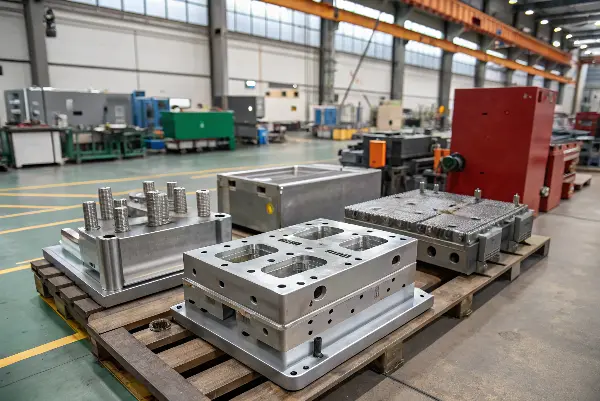
Comparing Tooling Options
Let’s lay out the differences so you can make an informed decision based on your business needs.
| Feature | Rapid Tooling (Bridge Tool) | High-Production Tooling |
|---|---|---|
| Material | Aluminum, P20 Steel | Hardened Steel (H13, S136) |
| Typical Lifespan | 500 – 10,000 shots | 100,000 – 1,000,000+ shots |
| Lead Time | 2-5 weeks | 6-12+ weeks |
| Cost | Low to Moderate | High |
| Best Use Case | Market testing, low-volume products, bridging the gap while a production tool is built. | Mass production, products with a long market life, high-volume orders. |
| Key Advantage | Speed and low initial cost, allowing for design flexibility. | Lowest cost per part, high repeatability, and extreme durability. |
Think of rapid tooling as your entry into the market. It lets you get products to customers quickly and validate demand without breaking the bank. Once your product is proven and the orders are rolling in, you can confidently invest in a high-production mold to scale up and drive down your per-part cost. This two-step approach is the safest and most capital-efficient way to grow.
How Can You Ensure Quality and Consistency From the First Part to the Millionth?
Your production mold is finally ready and you’re starting to manufacture parts. The first articles look suitable. But how do you make sure the 500,000th part is just as good as the first? It’s a common fear for business owners. A slip in quality can lead to product failures, customer complaints, and costly recalls. Maintaining consistency across a massive production run is a huge challenge. Without a robust system, you’re just hoping for the best, and hope is not a manufacturing strategy.
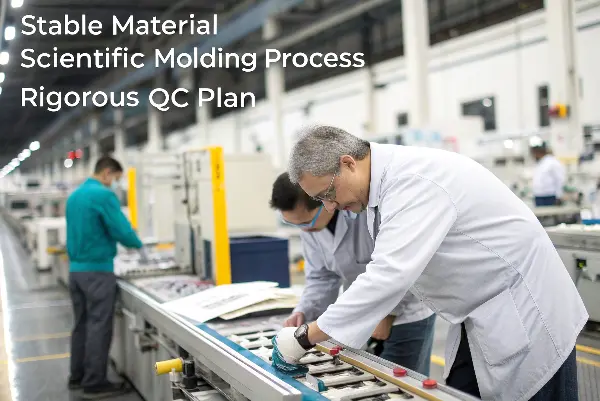
Ensuring long-term quality and consistency relies on three pillars: stable material, a scientific molding process, and a rigorous Quality Control (QC) plan. First, certify your raw material for every batch. Second, establish and document precise machine parameters—temperature, pressure, and time—and don’t deviate. Finally, implement a QC plan with regular checks on critical dimensions and visual inspections at set intervals. This systematic approach removes guesswork and helps support every part meets your specifications.
The Three Pillars of Consistent Production
-
Material Control: Your plastic part is only as good as the plastic it’s made from.
- Material Certification: Generally demand a certificate of analysis (CoA) from your material supplier for every single batch. This document verifies the material’s properties, like melt flow index, density, and tensile strength.
- Proper Handling: Ensure the raw material is dried correctly before molding. Many plastics absorb moisture from the air, which can cause splay, bubbles, and weak parts if not removed.
-
Scientific Molding (Process Control): This is about replacing “operator feel” with data.
- Document Everything: The molding technician should fine-tune and lock in the ideal parameters: injection speed, packing pressure, hold time, mold temperature, and cooling time.
- Process Monitoring: Modern injection molding machines can monitor these variables in real-time. Set alarms to alert you if any parameter deviates from the established window.
-
Rigorous Quality Control (QC): This is your verification system.
- First Article Inspection (FAI): Before starting a long run, perform a full dimensional and visual inspection on the first few parts produced.
- In-Process Checks: Define how often parts should be checked during the run (e.g., measure 5 parts every hour). Focus on the Critical-to-Quality (CTQ) dimensions.
- Final Inspection: Perform a final check on a sample of the batch before it ships.
By building a system around these three pillars, you create a manufacturing process that is stable, repeatable, and predictable. This is how you achieve consistency from the first part to the millionth.
Create Evidence Gates Between Stages
For each stage, define what is proven and what remains uncertain: fit, function, appearance, material, process, tolerance or durability. Do not let a successful appearance prototype silently become evidence for a production material or structural load.
Preserve Geometry, Datums and Revision Control
Use a controlled master CAD model and track offsets introduced for supports, machining, casting, draft or tool release. Keep datum schemes consistent where possible. A change that is harmless for a printed model can affect a molded part’s gate, parting or shrinkage.
Choose the Next Method From the Remaining Risk
Move to CNC when interfaces or material stock matter, to SLA when visual detail matters, to casting when several flexible samples are needed, and to molded prototypes when process or resin behavior is the risk. Avoid using a faster method after the risk has changed.
Compare Results Across Methods
Use the same functional fixture, measurement locations and acceptance language where possible. Explain differences caused by anisotropy, shrinkage, surface, conditioning, assembly or post-processing. This creates a learning loop rather than a collection of disconnected prototypes.
Make the Handoff Production-Ready
Before cutting a production mold, close open risks through DFM, material selection, flow or tolerance analysis and representative testing. Retain prototype data, photos, inspection and failure analysis. The development history should show why the production design is ready, not only that it looks finished.
Bridging Prototyping Technologies for Seamless Plastic Part Development: Buyer Review Checklist
- Define evidence gates and unproven risks for each development stage.
- Preserve master CAD, datums, revisions and method-specific offsets.
- Select the next method from the remaining risk, not from habit.
- Compare methods with consistent fixtures, dimensions and acceptance language.
- Carry prototype history into DFM, material, tooling and production validation.
Frequently Asked Questions
Should every product use all prototyping technologies?
No. Use only the methods that answer real risks. A simple part may need one method, while a complex product may need several staged evidence gates.
Why do prototypes from different methods disagree?
Material, orientation, shrinkage, surface, post-processing, stiffness and assembly conditions differ. The disagreement is useful when the cause is understood and tied to the decision.
Conclusion
The path from a simple prototype to full-scale production is a journey across different technologies and disciplines. It’s not just one step, but a series of carefully planned stages. By starting with the right prototyping method, diligently applying DFM principles, choosing the appropriate tooling for your volume, and enforcing strict quality controls, you can navigate this path successfully. This structured approach transforms your idea into a reliable, high-quality product ready for the market.