
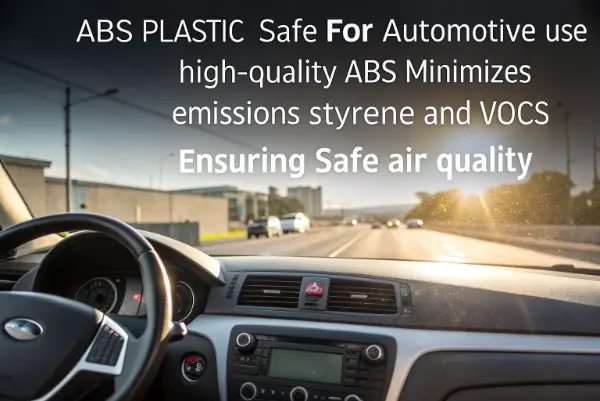
ABS can be suitable for many automotive interior components, but compliance belongs to the released material-and-finish system in its actual vehicle zone. Substrate, color, coating, adhesive, backing, wall section and process can all affect flammability, emissions, appearance and durability evidence.
This guide explains a validation framework. FMVSS No. 302 addresses a defined interior-material flammability requirement; it does not certify every safety, VOC, odor, fogging or durability obligation for a finished component.
Map Regulations and OEM Specifications by Part Zone
Identify vehicle category, destination and whether the component is within an occupant compartment, glazing field, airbag path or impact-sensitive area. In the United States, FMVSS No. 302 addresses burn resistance for specified interior materials. OEM standards commonly add test methods and limits for odor, emissions, aging, appearance and durability; the current program documents control the actual approval.
Select the Full Material and Finish System
Evaluate exact ABS resin, color, UV package, paint, plating, adhesive, foam and any backing. A substrate result does not automatically cover a laminated or decorated construction. Specify wall and test orientation where relevant. Recycled content or supplier changes may be feasible, but require review of odor, emissions, appearance and mechanical consistency.
Validate Cabin Heat, Sunlight and Chemicals
Instrument panels and upper trim can experience high solar load, while lower components see shoes, cleaners and spills. Test dimensional stability, gloss, color, cracking and attachment retention after heat, humidity and UV cycles appropriate to the program. Sunscreen, skin oils, air fresheners and cleaning agents can interact with molded stress and coatings.
Control VOC, Odor and Fogging at the Process Level
Resin, additives, colorant, paint, adhesives, purge residue and excessive melt history can contribute volatiles. Follow approved material handling and residence limits, and avoid unreviewed mold-release agents. Representative parts should be conditioned and tested by the specified method because sample preparation, bagging, temperature and time materially affect results.
Maintain Traceability From Cavity to Vehicle Lot
Record resin and color lot, cavity, process status, decoration batch and assembly. Use cavity-specific inspection for clips, bosses and visible surfaces. Tool repairs, alternate suppliers, process-window changes and transferred production require documented approval. Safety and appearance evidence must remain tied to the actual released construction.
ABS Automotive Interiors: Design and Validation Checklist
- Identify market, vehicle zone, occupant hazards and current OEM specifications.
- Qualify the complete substrate, color, coating, adhesive and backing construction.
- Test flammability, heat, UV, impact, chemicals, odor, VOC and fogging as applicable.
- Control melt history, process aids, finishing and sample conditioning.
- Maintain material, cavity, process, decoration and change traceability.
Authoritative Reference Points
Frequently Asked Questions
Does FMVSS 302 approval cover every automotive interior requirement?
No. It addresses a defined flammability requirement; OEM and product specifications may add many mechanical, emission, aging and appearance tests.
Can a painted ABS part use the substrate test result?
Do not assume so. The applicable construction and test plan should consider coatings, adhesives, foam and backing layers.
Why are VOC and fogging important for interior plastics?
Volatile substances can affect cabin air, odor and windshield deposits, so OEM programs often control materials, processing and test conditions.
Next step
Provide the vehicle zone, markets, OEM specifications, exact material and finish stack, critical dimensions and required evidence with the CAD. CKMOLD can review manufacturability through its injection mold service; final automotive approval remains program-specific.