
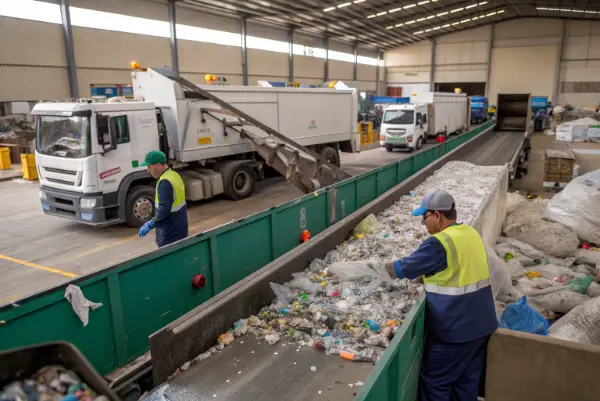
Plastic waste is piling up in our landfills, and if you are in manufacturing like me, you probably feel a bit responsible. We use ABS plastic for everything from car parts to Lego bricks, but what happens when these products reach the end of their life? Ignoring the environmental cost is no longer an option for serious designers and engineers.
ABS recycling methods involve mechanical recycling (grinding and re-melting) and chemical recycling (breaking down polymer chains). Mechanical recycling is the most common industry practice, where waste is collected, sorted, shredded into granules, washed, and then extruded into new pellets. This process significantly reduces the need for virgin petrochemicals, lowers energy consumption during production1, and keeps non-biodegradable waste out of landfills, making it a crucial strategy for sustainable manufacturing.
Many people ask me if recycling is actually worth the effort. It takes energy to recycle, after all. But when you look at the data, the answer becomes clear. Let’s dig into the specific impacts and see why moving toward a circular economy for ABS is not just good for the planet, but necessary for our industry’s future2.
What is the environmental impact of ABS plastic?
You might love ABS for its toughness and impact resistance, but have you stopped to think about where it comes from? It is a petroleum-based plastic, meaning its very existence starts with oil extraction. This creates a heavy carbon footprint before the material even reaches your mold, contributing to pollution and resource depletion.
The environmental impact of ABS plastic is significant because it is derived from non-renewable fossil fuels (acrylonitrile, butadiene, and styrene). Its production releases greenhouse gases and consumes high amounts of energy. Furthermore, ABS is not biodegradable; if it ends up in a landfill, it will sit there for hundreds of years, potentially leaching chemicals into the soil, or worse, breaking down into microplastics that enter our water systems.
We need to understand exactly why this material is problematic if we want to solve it. I remember when I first started in the mold factory, we focused only on the cycle time, not the lifecycle of the material. Now, we have to look deeper.
ABS (Acrylonitrile Butadiene Styrene) is a terpolymer. This means it is made of three distinct monomers. This complex structure is what gives it great properties, but it also complicates its environmental score.
Here is a breakdown of the specific issues:
1. Fossil Fuel Dependency
ABS production is energy-intensive. To make 1 kilogram of ABS, you need roughly 2 kilograms of oil equivalent in energy and raw materials. This is a heavy burden on natural resources. When oil prices fluctuate, the cost of virgin ABS swings wildly, which affects your bottom line.
2. Manufacturing Emissions
The process of polymerization releases Volatile Organic Compounds (VOCs).
- Acrylonitrile: Can be toxic if not handled correctly.
- Styrene: Is a known hazardous air pollutant.
- Butadiene: Is a carcinogen.
While modern factories have scrubbers to clean the air, the risk is never zero, and the energy required to run these safety systems adds to the carbon footprint.
3. End-of-Life Issues
This is the biggest problem for designers like Jacky. Since ABS does not rot or decompose:
- Landfill Space: It takes up valuable volume.
- Incineration: Burning ABS releases toxic smoke, including hydrogen cyanide, unless done in highly controlled waste-to-energy plants.
| Impact Category | Description | Severity |
|---|---|---|
| Source Material | Heavy reliance on crude oil extraction. | High |
| Production Energy | Requires high heat and pressure for polymerization. | High |
| Biodegradability | Effectively zero. Persists in nature for centuries. | Critical |
| Microplastics | Breaks physically into tiny particles that pollute oceans. | High |
Understanding these impacts forces us to look for better ways to handle the material after it leaves the consumer’s hands.
Is ABS 100% recyclable?
You might see the recycling symbol on a plastic part and assume the process is simple and perfect. It is tempting to think we can just toss old parts into a grinder and get perfect new material forever. Unfortunately, the reality of polymer chemistry is much more complicated than that.
ABS is theoretically 100% recyclable, but practically, it degrades with each heat cycle. You can mechanically recycle it by shredding and re-melting, but the material loses some of its physical properties, like impact strength and tensile modulus, every time it is processed. Therefore, while the material can be reused, it is often downcycled into less demanding products or mixed with virgin material to maintain quality.
So, if we cannot recycle it infinitely without losing quality, how do we manage it? We need to look at the limitations and the technical workarounds that molders use.
When I talk to clients about using recycled ABS, I always have to manage their expectations. You cannot take a high-precision medical device housing, recycle it, and expect to mold the exact same part with the same tolerances using 100% regrind.
Here is why "100% recyclable" is a tricky phrase:
Thermal Degradation
Every time you heat plastic in the injection molding barrel, you shorten the polymer chains.
- First Heat (Virgin): Long chains, strong bonds.
- Second Heat (Recycling): Chains break slightly (scission).
- Result: The material becomes more brittle. The famous "impact resistance" of ABS drops significantly. It might also yellow or change color.
Contamination
This is the enemy of recycling. ABS is often used in electronics (computer mice, keyboards, monitor housings). These products contain:
- Metal screws and inserts.
- Labels and glue.
- Other plastics (like PC or PVC).
If you melt ABS with even a tiny bit of PVC, the PVC burns and ruins the entire batch. Separating ABS from other plastics like High-Impact Polystyrene (HIPS) is very difficult because they have similar densities.
The "Regrind" Ratio
In my factory, we usually follow a safe rule. We mix recycled material (regrind) with virgin material.
- Standard Practice: 10% to 20% regrind mixed with 80% to 90% virgin material.
- Benefit: This maintains the physical properties close to the original specification while reducing waste.
- 100% Recycled: Only used for parts where appearance and strength are not critical, like hidden structural supports or garden pots.
| Recycling Tier | Material Composition | Typical Application |
|---|---|---|
| Tier 1 | 100% Virgin | High-gloss, high-impact consumer electronics. |
| Tier 2 | 80% Virgin / 20% Regrind | Standard internal parts, non-cosmetic housings. |
| Tier 3 | 100% Recycled | Construction spacers, shipping pallets, simple toys. |
So, yes, the chemistry allows it to be recycled, but the application dictates how much recycled content you can actually use.
Is ABS filament environmentally friendly?
3D printing has exploded in popularity, and ABS is one of the most common filaments used by hobbyists and professionals alike. You print a prototype, test it, and maybe throw it away. It feels like small-scale manufacturing, but does that make it better for the environment?
ABS filament is generally not considered environmentally friendly compared to alternatives like PLA (Polylactic Acid). It is petroleum-based, emits strong fumes (styrene) during printing that require ventilation, and is not biodegradable. However, it is durable and long-lasting, which means printed parts do not need to be replaced as often, offering a small trade-off in terms of product longevity.
If you are printing prototypes in your office, you need to know the risks. I have seen many design labs with poor ventilation, and that smell of hot plastic is actually a warning sign.
Let’s break down the environmental profile of ABS specifically in the context of Additive Manufacturing (3D Printing).
The VOC Problem
When you inject mold ABS, the machine is closed. The fumes are contained or vented outside. When you 3D print, the material is melted on an open bed (usually).
- Emissions: Studies show 3D printers using ABS emit significantly more ultrafine particles (UFPs) and volatile organic compounds (VOCs) than those using PLA.
- Health: This is a localized environmental hazard for the user.
Waste Generation
3D printing is often called "additive" manufacturing, implying zero waste. But that is not true for ABS.
- Supports: ABS often requires support structures to print complex geometries. These supports are broken off and thrown away.
- Failures: ABS is prone to warping. If the print bed isn’t hot enough or the room is drafty, the part warps, the print fails, and you have a pile of plastic spaghetti. This waste rate can be high for beginners.
Comparison with PLA
Designers often choose between ABS and PLA.
- PLA (Corn starch based): Biodegradable (in industrial composters), sweet smell, renewable.
- ABS (Oil based): Stronger, heat resistant, but toxic production.
So, why do we still use ABS filament? Because PLA melts in a hot car. ABS survives.
- Sustainability though Longevity: If you print a bracket in PLA and it breaks in a week, you have to print another one. If you print it in ABS and it lasts 5 years, the ABS might actually be the "greener" choice for that specific application because you consumed less material over time.
| Feature | ABS Filament | PLA Filament |
|---|---|---|
| Raw Material | Petroleum | Plant Starch (Corn/Sugarcane) |
| Fumes | Toxic (Styrene) | Low/Sweet Odor |
| Biodegradable | No | Yes (Industrial conditions) |
| Durability | High (Heat/Impact) | Low (Brittle/Low Heat) |
| Warping | High | Low |
For rapid prototyping where the part will be discarded quickly, use PLA. For functional parts, ABS is necessary, but it carries a higher environmental cost.
What are the environmental impacts of recycling?
It seems obvious that recycling is the "good" choice, but we must be critical thinkers. Does the process of collecting, transporting, washing, and melting old plastic actually save energy compared to making new plastic? We need to ensure the solution is not worse than the problem.
The environmental impacts of recycling ABS are overwhelmingly positive compared to producing virgin material, despite the energy required for processing. Recycling ABS consumes about 80% to 90% less energy than producing it from raw oil. However, the process does have impacts: it requires water for cleaning, electricity for shredding and extruding, and transportation emissions to move waste to recycling facilities.
I have crunched the numbers for my own factory operations. Using recycled material lowers our energy bill significantly. But it is important to be transparent about the "costs" of the recycling process itself.
Recycling is an industrial process, and no industrial process is perfectly clean. Here is a deep dive into the inputs and outputs of the recycling loop.
1. Transportation Emissions (The Hidden Cost)
This is often the weak link. If you collect plastic waste in the USA, ship it to Asia for processing, and ship it back as pellets, you have burned a lot of diesel fuel.
- The Solution: Localized recycling. We need to grind and re-process waste as close to the source as possible. In my mold factory, we try to re-grind runners and sprues right next to the machine (closed-loop recycling) to eliminate transport costs.
2. Water Usage and Pollution
Before you can melt old ABS, it must be clean.
- Washing: Post-consumer waste (like old vacuum cleaners) is dirty. It needs aggressive washing.
- Microplastics: The washing water inevitably picks up tiny plastic particles. If the recycling plant does not have advanced filtration, these microplastics flow straight into the wastewater system.
3. Energy Consumption
- Mechanical Recycling: Requires electricity to run the heavy motors of granulators and the heaters of extruders. However, melting existing plastic takes roughly 20-30 MJ/kg.
- Virgin Production: Creating new ABS from oil takes roughly 90-100 MJ/kg.
- Net Gain: You save a massive amount of energy by recycling.
4. Chemical Additives
To restore the properties of recycled ABS, we often add stabilizers or impact modifiers. These are chemicals that must be manufactured, adding a small amount to the footprint.
The Verdict:
While recycling has a footprint (water, transport, electricity), it is a fraction of the damage caused by drilling for oil and refining it into new plastic. The key is to optimize the logistics so we aren’t shipping trash around the world.
| Recycling Step | Environmental Cost | Mitigation Strategy |
|---|---|---|
| Collection | Fuel emissions from trucks. | Localized recycling hubs. |
| Sorting | Energy for sensors/labor. | Better product design (avoid mixed materials). |
| Washing | Water use, microplastic runoff. | Closed-loop water systems, advanced filtration. |
| Extrusion | Electricity for heat/motors. | Use renewable energy (solar) at the plant. |
By understanding these steps, designers can help. If you design a product that is easy to disassemble, you make the sorting and washing steps easier and cheaper, which makes recycling more viable.
Conclusion
ABS is a vital material for modern manufacturing, but its environmental cost is high. While it is not biodegradable and relies on fossil fuels, it is highly recyclable. By using mechanical recycling, we can save up to 90% of the energy compared to making new plastic. For designers like us, the goal is to design for disassembly and be open to using recycled grades in our products. We must balance performance with responsibility.
-
"Life cycle analysis of mechanical recycling vs. conventional …", https://pubmed.ncbi.nlm.nih.gov/41043524/. Life cycle assessments indicate that mechanical recycling of ABS thermoplastics requires substantially less energy than virgin resin production from petrochemical feedstocks, though exact savings vary depending on collection efficiency, contamination levels, and processing infrastructure. Evidence role: statistic; source type: research. Supports: quantitative comparison of energy consumption and petrochemical use between recycled and virgin ABS production. Scope note: Energy savings are system-dependent and vary with recycling infrastructure quality and contamination rates ↩
-
"Extended Producer Responsibility: Basic Facts and Key …", https://www.oecd.org/content/dam/oecd/en/publications/reports/2024/04/extended-producer-responsibility_4274765d/67587b0b-en.pdf. Extended producer responsibility regulations in multiple jurisdictions now require manufacturers to take responsibility for end-of-life management of plastic products, creating economic and compliance incentives for circular economy approaches in thermoplastics including ABS. Evidence role: general_support; source type: government. Supports: regulatory and policy drivers making circular economy practices increasingly necessary for plastics manufacturers. Scope note: Regulatory requirements vary significantly by jurisdiction and product category ↩