
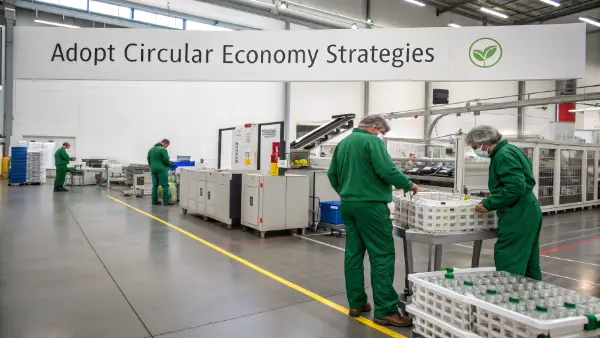
Plastic waste is piling up everywhere. Your clients want green packaging, but switching your whole production line feels risky and expensive. If you ignore this shift, you will lose business. But if you adopt a circular economy, you can save money, cut waste, and win better contracts.
Plastic packaging manufacturers can adopt circular economy strategies by designing for recyclability with mono-materials, integrating post-consumer recycled (PCR) content, and creating reusable packaging systems. By eliminating unnecessary plastics, partnering in take-back programs, and optimizing supply chains, manufacturers can reduce waste and build a profitable, closed-loop material lifecycle.
Making the switch to a circular model does not have to happen overnight. It is about making smart, step-by-step changes to how you design, produce, and recover your products. I have seen firsthand how simple shifts in manufacturing can completely change a company’s profit margins. Let us look at exactly how you can do this.
What Are the Core Strategies for a Circular Plastics Economy?
Designing new packaging is tough. Making it sustainable feels even harder. If we just keep using virgin plastics, we face higher material costs and angry buyers. But if we shift our core strategies, we build a system that feeds itself.
The core strategies for a circular plastics economy include reducing material use, designing reusable packaging systems, and enabling high-quality recycling. Manufacturers must move away from single-use plastics by implementing refill models and returnable crates. Additionally, using mono-materials like PET or HDPE makes recycling much easier and creates a profitable reverse value chain for raw materials.
Reduce Single-Use Plastics
The best way to handle waste is to stop making it. We need to look closely at every part we produce. Ask yourself if a specific plastic wrap or container is truly needed. By eliminating unnecessary packaging, you save on raw material costs immediately. I always look for ways to cut down the wall thickness of a part without losing strength.
Build Reusable Systems
Instead of making a bottle that gets thrown away, design one that comes back. Refill systems and returnable crates are growing fast. When you design for reuse, the product must be durable. It has to survive being washed, shipped, and dropped. In the world of plastic manufacturing, this means picking tougher resins and getting your injection molds perfectly tuned for thicker walls.
The Power of Mono-Materials
Many old packaging designs use multi-layer films. They might have a layer of foil, a layer of PET, and a layer of PE. This is terrible for recycling because the materials cannot easily be pulled apart.
To fix this, use mono-materials. This means making the whole package out of just one type of plastic, like 100% HDPE. When the package reaches the recycling plant, it can be melted down easily.
Here are the main benefits of mono-materials:
- They are highly valued by recyclers.
- They lower your production complexity.
- They fit perfectly into existing recycling infrastructure.
If you focus on reduction, reuse, and single-material designs, you build a strong base for a circular business.
How Does Eco-Design Improve Packaging Recyclability?
Multi-layer films are a nightmare to recycle. You spend good money making them, only to watch them go straight to a landfill. This breaks the circular loop completely. Eco-design solves this problem from the very first sketch.
Eco-design improves packaging recyclability by eliminating unnecessary materials, prioritizing mono-materials, and using clear consumer labeling. By avoiding complex structures that are difficult to separate, manufacturers ensure their products fit into existing technical recycling cycles. Lightweighting designs and using compostable alternatives also minimize material waste right at the source.
Keep It Simple with Mono-Materials
When I look at a new project, the first thing I check is the material list. If a design calls for three different plastics bonded together, I push back. Good eco-design means keeping it simple. You want to use one polymer family. If you use a PET bottle, make sure the cap and the label are compatible with the PET recycling stream.
Lightweighting the Design
Lightweighting means using less plastic to do the same job. You can do this by changing the shape of the container or adding ribs for strength. When we prototype these designs using CNC machining, we test exactly how thin we can make the walls before they fail. Less plastic means less weight. Less weight means cheaper shipping and a smaller carbon footprint.
Biodegradable and Compostable Options
Sometimes, recycling is not the best end-of-life option. For food packaging that gets very dirty, compostable materials are a great choice. These materials break down naturally. However, you must label them clearly. If a consumer throws a compostable cup into a standard plastic recycling bin, it ruins the batch.
| Design Strategy | Main Benefit | What to Avoid |
|---|---|---|
| Mono-materials | Easy to melt and reuse | Multi-layer films |
| Lightweighting | Saves resin and shipping costs | Overbuilding thick walls |
| Compostable materials | Great for food-contaminated waste | Mixing with standard plastics |
Clear Consumer Labeling
Your eco-design only works if the customer knows what to do. Use large, clear labels. Tell them exactly how to recycle the item. If they need to remove a sleeve before tossing the bottle, print that instruction clearly.
Why Should Manufacturers Integrate Post-Consumer Recycled Content?
Finding cheap, good raw material is getting harder. Relying purely on virgin resin leaves your business vulnerable to sudden market price spikes. Blending in recycled content secures your supply chain and cuts your costs.
Manufacturers should integrate post-consumer recycled (PCR) content because it closes the material loop, reduces reliance on virgin plastics, and lowers carbon emissions. By blending PCR with virgin resin, companies can easily hit sustainability goals of 20% to 50% recycled content. It also helps divert manufacturing waste from landfills and creates new, profitable value streams.
Start with Internal Scrap
The easiest way to start using recycled content is to look at your own factory floor. Every time we set up a machine at CKMOLD, there is some scrap. Runners, sprues, and bad parts happen. Instead of throwing them away, grind them up. Mix this regrind back into your virgin material. This is a closed-loop system right inside your own walls. It is free material, and it instantly drops your waste to zero.
Sourcing Reliable PCR Feedstock
Using post-consumer recycled (PCR) plastic is the next big step. This is plastic that a consumer used and put in the recycle bin. The challenge here is quality. PCR can sometimes have dirt, different colors, or slightly different melting points.
To fix this, you need to write strict supply contracts with your recyclers. Demand consistent quality. When you find a good supplier, hold onto them. Reliable PCR is a goldmine.
Adjusting the Manufacturing Line
Running PCR is not exactly the same as running virgin plastic. You have to make adjustments.
- Temperature: PCR often melts a bit differently. You may need to adjust your barrel temperatures.
- Flow Rates: The plastic might not flow into the injection mold as smoothly. We often open up the gates in the mold to help the plastic push through.
- Appearance: PCR can sometimes look cloudy. It is best used for dark-colored parts or inner layers where the look does not matter as much.
By hitting a goal of just 30% recycled content, you show your clients that you are serious about the planet. And you protect yourself against raw material shortages.
How Can Shared Infrastructure and Tech Enhance Waste Collection?
Even the smartest packaging is useless if it is not collected. Poor sorting means your perfect mono-material still goes to the dump. Bad logistics waste fuel. Better tech and shared systems fix this broken link.
Shared infrastructure and technology enhance waste collection through automated sorting, take-back programs, and blockchain traceability. By collaborating with industry partners, manufacturers can build shared recycling facilities and optimize reverse logistics. Technologies like blockchain provide transparent tracking of a package’s lifecycle, ensuring high-quality sorting and returning clean materials back to converters.
Partnering Up for Take-Back Programs
You do not have to do this alone. Setting up a collection system by yourself is too expensive. Instead, partner with other businesses. If you make plastic pallets or large drums, work with your clients to get them back. Offer a small discount on their next order if they return the empty containers. This creates a steady stream of clean, known material coming right back to your door.
Smart Sorting Technology
When plastic gets to a recycling plant, sorting it fast is critical. New technology uses artificial intelligence and optical scanners to sort plastics instantly. These cameras can tell the difference between PET and HDPE in a fraction of a second. Investing in or supporting facilities with this tech ensures you get clean flakes back for your next production run.
Blockchain for Traceability
Transparency is becoming a big deal. Clients want proof that your plastic is actually recycled. Blockchain technology tracks a piece of plastic from the moment it is made, to the user, to the recycler, and back to you. It creates a digital passport for the material.
- It stops fake "greenwashing" claims.
- It proves your recycled content percentages to auditors.
- It helps you spot slow points in your supply chain.
Optimizing Logistics
Moving empty plastic containers around takes a lot of fuel. To cut emissions, optimize your transport routes. If a truck delivers new parts to a client, that same truck should bring scrap or empty crates back on the return trip. Never drive an empty truck. This simple rule saves energy and money.
What Can We Learn from Real-World Circular Packaging Examples?
Theory is great, but does it actually work? It is easy to worry that these circular models will slow you down or hurt your bottom line. Look at successful companies to see the proof.
Real-world circular packaging examples show that coordination across the supply chain is highly profitable. Swedish grocery retailers use a shared system of returnable crates that last 15 years before being recycled. Similarly, Unilever successfully collects more packaging than it sells by partnering with local recyclers and educating consumers. These cases prove that circular systems reduce long-term costs.
The Swedish Crate System
One of the best examples of a working circular economy is in Sweden. Their grocery stores share a pool of returnable plastic crates. Instead of each store buying cheap, single-use cardboard or weak plastic, they rent heavy-duty crates.
These crates are strong. They last for up to 15 years. They are washed and reused over and over. When a crate finally breaks, it is ground up and molded into a brand new crate. Because the system is shared, no single company bears the whole cost. This cuts disposable needs to zero and saves millions.
Unilever’s Aggressive Recycling Push
Unilever set a massive goal: to collect and process more plastic packaging than they sell. This sounds impossible, but they are doing it through partnerships. They do not build their own recycling plants. Instead, they invest in local waste collection businesses. They help fund the tech needed to sort flexible plastics, which used to be unrecyclable. By creating demand for recycled plastic, they make the whole recycling industry stronger.
Consumer Education is Key
None of this works if the user throws the plastic in the trash. The best companies spend time and money educating the public. They run campaigns showing exactly how to wash and sort containers.
Making It Work for Your Business
You can apply these lessons to your own factory today.
- Look for shared systems. Can you share shipping containers with a neighbor business?
- Invest in quality. A heavy, well-made plastic part that lasts 10 years is better than a cheap one that breaks in a week. At CKMOLD, we always say Master Molding Right. Do it right the first time, make it durable, and keep it in the loop.
Conclusion
Switching to a circular economy is the smartest move a plastic manufacturer can make today. By focusing on simple mono-materials, blending in PCR, and designing for reuse, you protect your business from raw material shortages. It takes a little extra planning upfront, but the long-term savings and stronger client relationships make it incredibly worth it. Start small, track your waste, and close the loop.