
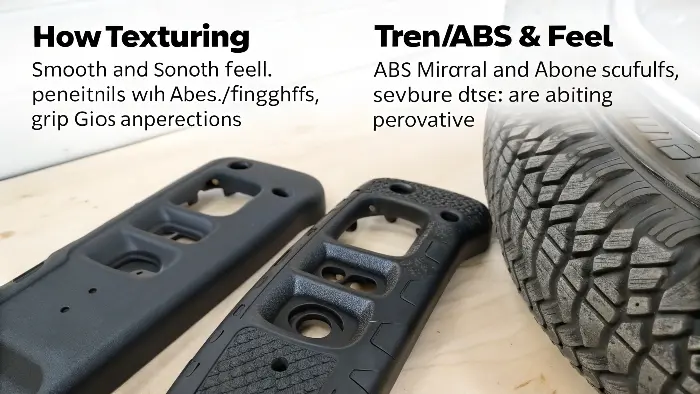
Struggling to make your ABS parts stand out? Ordinary finishes can make products look cheap and feel underwhelming, impacting customer perception and sales. It’s a common headache for many businesses I’ve worked with.
Second paragraph at the beginning, answering the question posed by the title, this paragraph must be HELPFUL to the reader and will be used later to compete for Google’s Featured Snippets. (max 60 words)
Elevate your ABS injection molded parts through painting for custom colors, plating for a metallic look and enhanced durability, or texturing for improved grip and aesthetics. These techniques significantly boost product appeal and functionality, meeting diverse market demands effectively.
ABS is popular for visible plastic parts because it accepts many finishing routes. But surface finishing is not something to decide after the mold is finished. Texture, paint, plating, polish and marking requirements should shape the mold design from the beginning.
Related CKMOLD resources: injection mold services, DFM analysis, mold design, insert molding and overmolding, and mold testing and validation.
Is Painting the Right Choice for Adding Color and Protection to Your ABS Parts?
Plain ABS parts lacking visual appeal? Unprotected surfaces can scratch easily, diminishing your product’s lifespan and perceived value, which is a big concern for businesses like yours, the buyer.
Painting offers a versatile solution for ABS parts, providing a wide color spectrum, brand consistency, and a protective layer against wear and UV degradation. It’s an effective way to enhance aesthetics and durability, often being the go-to for many consumer electronics.
Painting is often the first thing people think of when they want to add color or a specific look to plastic parts. And for good reason! It’s incredibly versatile. You can achieve almost any color imaginable, match brand-specific Pantone shades, and apply different gloss levels – from matte to high gloss. For someone like the buyer, who’s in consumer electronics, consistent branding and a premium look are super important. For a high-end audio enclosure, a satin black paint system may be selected for appearance, but adhesion, gloss, color, masking and wear still require part-specific approval.
But it’s not just about looks. A good paint job adds a layer of protection. ABS is pretty tough, but paint can shield it from scratches, scuffs, and even UV radiation, which can degrade plastic over time. Think about products that are handled a lot or exposed to sunlight.
The process itself involves a few key steps. First, surface preparation is critical – you can’t just slap paint on raw plastic. The parts need to be cleaned thoroughly to remove any oils, dust, or mold release agents. Sometimes, a primer is needed to ensure good adhesion. Then, the paint is applied, usually by spraying for a uniform coat. We often use robotic arms for this in larger production runs to ensure consistency. After painting, the parts need to be cured, often in an oven, to harden the paint. Common paint types include acrylics for general use, polyurethanes for higher durability, and epoxies for chemical resistance. Choosing the right one depends heavily on the product’s end-use. It’s a bit more involved than it sounds, but the results can be fantastic.
Could Plating Give Your ABS Parts That Premium Metallic Sheen and Toughness?
Want a high-end metallic look without the cost and weight of actual metal? Plastic parts can sometimes feel less robust than desired, which might not align with the premium image you’re aiming for.
Plating ABS parts, often with chrome, nickel, or copper, creates a durable, corrosion-resistant metallic finish. This process significantly enhances visual appeal, perceived value, and even adds a bit of structural integrity for a premium product feel.
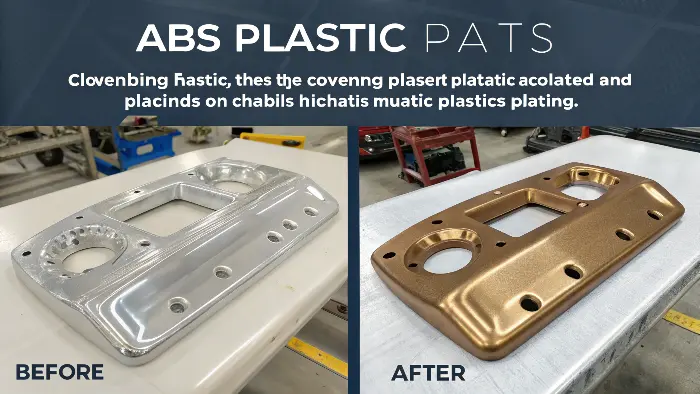
Now, if you’re looking for that shiny, metallic look – think car grilles, bathroom fixtures, or high-end electronic accents – then plating is your friend. It’s a process that deposits a thin layer of metal onto the ABS surface. The most common one you hear about is chrome plating, but nickel, copper, gold, and silver are also options, though some are pricier than others, naturally. I find that for many of my clients, like the buyer, who want to give their consumer electronics a more luxurious or durable feel, plating is a serious contender.
The cool thing about plating plastics is you get the aesthetic and some of the properties of metal (like hardness and wear resistance) without the weight or cost of a solid metal part. It can really elevate the perceived value. I had a client who switched from painted silver to actual chrome plating for a small decorative trim on their product, and customer feedback on the “premium feel” shot up. It also provides excellent corrosion resistance and can even offer EMI/RFI shielding, which is a big plus for electronics.
The process, though, is quite a bit more complex than painting. Because plastic isn’t conductive, you can’t directly electroplate it. So, it involves a multi-stage chemical process. First, the ABS is etched to create microscopic pores for adhesion. Then, it goes through neutralization, activation (with something like palladium), and an electroless plating step (usually nickel or copper) to create an initial conductive layer. Once that’s on, the part can be electroplated with the final metal layer like chrome. It’s a bit of a science, and getting it right consistently, especially adhesion, is key. It also requires careful handling of chemicals, so environmental considerations are important here.
How Can Texturing Transform the Look, Feel, and Functionality of ABS Components?
Are your ABS parts too smooth, leading to poor grip or a generic appearance? Fingerprints and minor scuffs can also be a real nuisance, making products look used quickly.
Texturing ABS parts, often directly in the mold, creates various surface patterns. This improves grip, hides minor imperfections like sink marks or flow lines, and enhances visual appeal. It offers a cost-effective way to differentiate products and improve the overall user experience.
What If You Need More Than One Finish for Your ABS Masterpiece?
Facing a complex project where a single finish just isn’t enough to meet all your design goals? Juggling different aesthetic, functional, and even branding needs for a single part can be quite tricky.
Combining surface finishes, like texturing with selective painting or plating specific areas after molding, offers maximum design flexibility for ABS parts. This approach allows for tailored aesthetics, enhanced functionality, and truly unique product differentiation, making your product stand out.
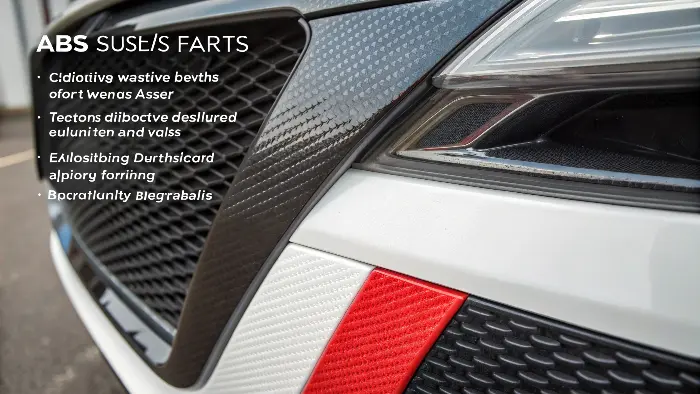
Sometimes, one finish alone won’t cut it. You might need the grip of a texture in one area, the vibrant color of paint in another, and maybe a shiny plated logo to top it off. This is where things get really interesting and where you can create some truly standout products. I’ve worked on many projects where we combined finishes to achieve a specific design intent. For instance, the buyer might have a consumer electronic device with a textured main body for good grip and a premium feel, but a high-gloss painted front panel for a sleek display area, and perhaps a small, plated brand emblem.
Combining finishes requires careful planning. Masking is a big one – if you’re painting a textured part, you need to make sure the paint only goes where you want it. Or if you’re plating a specific section, the rest of the part needs to be protected. Adhesion between layers is also crucial. For example, some paints might not stick well to certain plated surfaces, or a textured surface might need a special primer before painting. The order of operations matters too. Usually, texturing is done in the mold, and then painting or plating happens as secondary operations.
Think about a car interior – you often see textured plastics, painted accents, and chrome details all working together. It’s all about creating a cohesive and high-quality experience. We once helped a client develop a remote control that had a soft-touch painted main body (for a nice feel), a textured back for grip, and a few small, brightly plated buttons for easy identification. It was more complex to manufacture, sure, but the end result was a product that felt and looked much more expensive than its competitors. This kind of detail can be a real differentiator in a crowded market. So yeah, don’t be afraid to mix and match – it just requires a bit more thought upfront.
How Do You Choose the Best Surface Finish for Your Specific ABS Application?
Overwhelmed by the sheer number of finishing options for your ABS parts? Making the wrong choice can lead to costly rework, project delays, or a final product that just doesn’t hit the mark.
Select the best ABS surface finish by carefully considering your product’s end-use, desired aesthetics, durability requirements (like scratch or UV resistance), your budget, and expected production volume. A methodical evaluation ensures optimal performance and visual appeal for your components.
| Alright, so we’ve talked about painting, plating, texturing, and even combining them. How do you, as a business owner like the buyer, actually decide what’s best for your ABS parts? It’s not necessarily a straightforward answer, as it depends on a bunch of factors. I generally tell my clients to think about a few key things. First, what’s the end-use of the product? Is it going to be handled frequently, exposed to sunlight, or chemicals? This will heavily influence durability requirements. Second, what’s the desired aesthetic? Are you going for a vibrant color, a metallic sheen, a subtle matte look, or a specific tactile feel? Your brand identity plays a role here too. Budget is, of course, a huge factor. In-mold texturing is generally the most cost-effective on a per-part basis once the mold is made, while multi-step processes like plating can be more expensive. Production volume also matters. For high volumes, investing in a textured mold makes a lot of sense. For smaller runs, painting might be more flexible. To help make this a bit clearer, here’s a quick comparison. Think of it as a cheat sheet: |
Feature | Painting | Plating | Texturing (In-Mold) |
|---|---|---|---|---|
| Aesthetics | Wide color range, various gloss levels | Metallic look (chrome, nickel, etc.), high gloss | Patterns, matte/gloss, hides imperfections | |
| Durability | Good (UV, scratch resistance varies by paint type) | Excellent (wear, corrosion resistance) | Good (hides wear, part inherently durable) | |
| Tactile Feel | Smooth (can be soft-touch) | Smooth, cool (metal-like) | Varies (grippy, smooth, patterned) | |
| Cost (Per Part) | Moderate | High | Low (after initial mold cost) | |
| Complexity | Moderate (surface prep, application, curing) | High (multi-stage chemical process) | Low (part of molding process) | |
| Lead Time | Adds post-processing time | Adds significant post-processing time | Minimal (integrated with molding) | |
| Typical Uses | Housings, covers, branding | Decorative trim, luxury feel, EMI shielding | Handles, enclosures, functional surfaces |
Texture and Gloss Need Early Agreement
A textured ABS surface can hide minor flow marks and scratches, while a high-gloss surface exposes them. The drawing should define texture standard, gloss target and cosmetic zones. Mold steel choice, polishing sequence and parting-line location all affect the final appearance.
Painting and Plating Require Different Mold Priorities
Painted ABS needs stable surface quality, low contamination and good adhesion. Plated ABS needs plating-grade resin and low stress. A mold optimized for paint is not automatically optimized for metalizing. CKMOLD reviews the finishing route before confirming gate and ejection placement.
Laser Marking and Assembly Marks
Laser marking can add logos, codes or functional labels, but the material grade and surface texture affect contrast. Assembly features can also create stress whitening or scratches if the part is designed without finishing in mind. Cosmetic parts need both molding and downstream handling control.
How Finishing Changes Tolerances
Paint, plating and coatings add thickness and may affect fit. Tight snap fits, mating covers and cosmetic seams should include finishing thickness in tolerance planning. Ignoring coating build-up can create assembly problems after the part already looks beautiful.
ABS Injection Molded Part Surface Finishing Options: Buyer Review Checklist
- Define cosmetic A-surfaces and acceptable defect limits.
- Confirm whether the finish is molded texture, paint, plating, polish or laser marking.
- Place gates, ejectors and parting lines away from key visual zones where possible.
- Account for coating thickness in assembly dimensions.
- Validate finish with real molded samples before mass production.
FAQ
Can ABS be painted or plated?
Yes. ABS is commonly painted and selected grades can be plated, but resin grade, surface stress and cleanliness must be controlled.
When should surface finish be specified?
It should be specified before mold design so gates, ejectors, parting lines and steel finish can support the appearance requirement.
Conclusion
Choosing the right surface finish—painting, plating, or texturing—can dramatically enhance your ABS parts’ appeal and function. Consider your product’s needs, aesthetics, and budget to make the best decision for success. It’s an investment that pays off.