
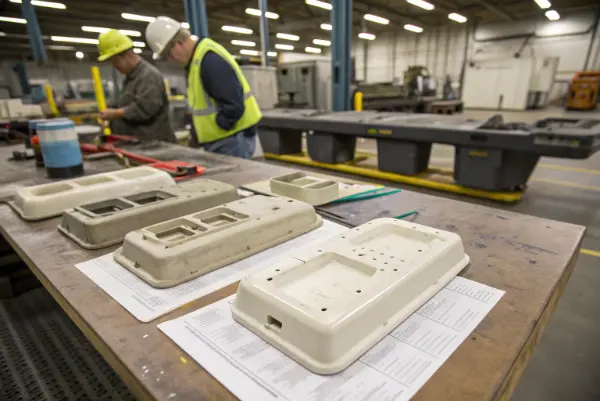
Have a brilliant idea for a plastic product but feel lost in the manufacturing maze? The jargon and complex machinery of plastic injection molding can seem overwhelming, leaving you unsure where to even begin. I’m here to break down the entire process into simple, clear steps, giving you the confidence to turn your design into a reality, from the very first pellet to the final polished part.
Plastic injection molding from start to finish is a commercial and engineering workflow that begins with an RFQ and ends with accepted, traceable products arriving in the required packaging. CAD, material, mold design and machine cycles are central, but quotation assumptions, approvals, quality records, tool ownership and logistics decide whether the project launches smoothly.
Related engineering resources: injection molding services | export injection molds | mold testing and validation
Plastic injection molding is a manufacturing cycle that creates parts by injecting molten material into a mold. The process consists of four main stages: Clamping, where the two halves of the mold are secured under high pressure; Injection, where melted plastic pellets are forced into the mold cavity; Cooling, where the plastic solidifies into the shape of the part; and Ejection, where the finished part is pushed out of the mold. This cycle repeats rapidly to produce thousands of identical parts.
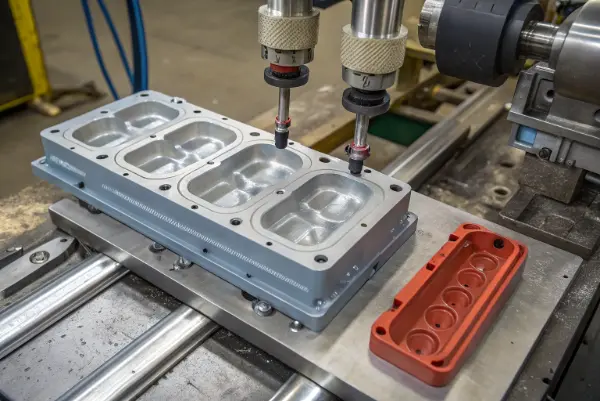
What Really Happens During the Clamping and Injection Stage?
Are your parts coming out with ugly excess material, known as flash? Or are they incomplete, with voids and sinks? These frustrating defects often trace back to a misunderstanding of the first two critical steps: clamping and injection. Getting these right isn’t just a machine setting; it’s the foundation for a suitable part.
The clamping stage involves the injection molding machine’s hydraulic system closing the two halves of the mold tool with immense force. This force, or tonnage, must be high enough to resist the pressure of the molten plastic during injection. The injection stage then uses a reciprocating screw to push a precise amount of melted plastic, called a “shot,” into the now-closed mold cavity until it is completely filled. Proper balance between clamp force and injection pressure is essential.
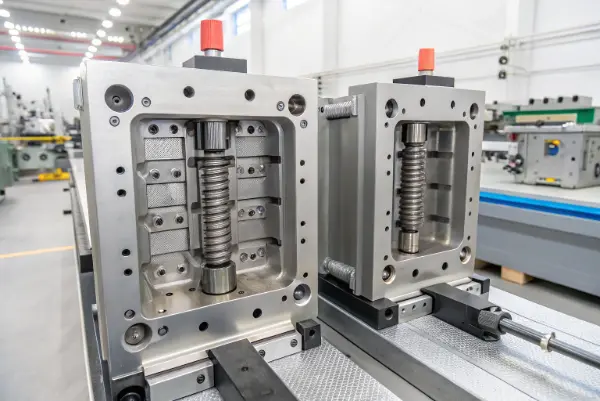
When I was first starting out, I learned a hard lesson about clamp tonnage. We had a part with a large surface area, and we kept getting flash on every single shot. My mentor pointed out that the injection pressure was literally forcing the mold halves apart by a microscopic amount because we hadn’t used a machine with enough clamping force. It was a simple but expensive mistake. You need to think of these two stages as a balancing act.
The Balancing Act: Force vs. Pressure
The entire success of the initial molding phase depends on the relationship between the force holding the mold shut and the pressure pushing plastic in.
Here’s a simple table to show how these two factors interact and what happens when they are out of balance.
| Scenario | Clamp Force | Injection Pressure | Result |
|---|---|---|---|
| Ideal Setting | Sufficient to resist injection pressure | Fills the cavity completely | Suitable, fully-formed part with no defects. |
| Insufficient Clamping | Too low for the injection pressure | Pushes the mold halves apart | Flash: Excess plastic leaks out. |
| Insufficient Injection | Sufficient | Too low to fill the entire mold | Short Shot: Incomplete, unfilled part. |
| Excessive Injection | Sufficient | Too high or too fast | Burn Marks or Flashing: Can damage mold. |
Getting this balance right is the first step. It requires good communication between the part designer and the mold operator to ensure the part is designed for a specific machine size and the machine is set up correctly.
Why Are Cooling and Ejection So Crucial for Part Quality?
Ever had a plastic part that looked suitable coming out of the mold, only to find it warped into a useless shape an hour later? This is a common and frustrating problem. It happens when the cooling and ejection stages are rushed or poorly managed. These final steps are just as important as injection, as they lock in the final shape and quality of your product. How can you ensure they are done right?
Cooling is the stage where the molten plastic inside the mold solidifies. It’s often the longest part of the cycle and is critical for dimensional stability. Specialized channels within the mold circulate a fluid, like water, to draw heat away uniformly. Once cooled, the ejection stage uses pins or plates to carefully push the solidified part out of the mold cavity without causing damage or stress. Proper cooling time prevents warping, while a well-designed ejection system prevents marks and breakage.
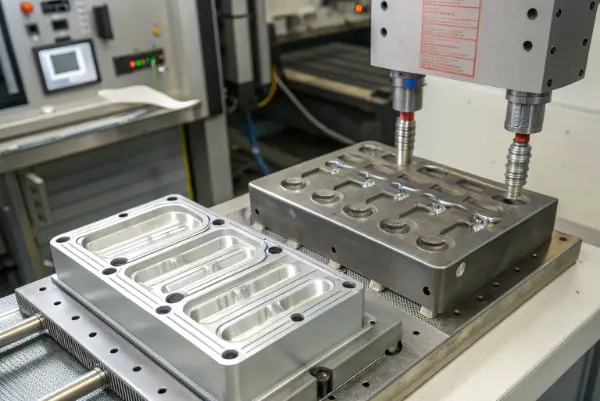
From Molten to Solid: The Final Steps
Cooling and ejection are where your part gets its final, permanent shape and finish. If either of these is handled poorly, all the careful work from the previous stages is wasted.
The Science of Cooling
Cooling isn’t just about waiting. It’s an active, engineered process. The goal is to remove heat from the plastic at a controlled and uniform rate.
- Cooling Channels: Molds are built with a network of channels drilled through the steel blocks. A temperature-controlled fluid, usually water, is constantly pumped through these channels. The layout of these channels is a critical part of mold design. They need to be close to all surfaces of the part to ensure even cooling.
- Differential Shrinkage: If one part of the component, like a thick wall, cools slower than another part, like a thin wall, it will shrink at a different rate. This internal stress is what causes warping. A well-designed part has uniform wall thickness to prevent this, and a well-designed mold has cooling channels placed strategically to combat any unavoidable variations.
- Cycle Time: Cooling typically accounts for over half of the total injection molding cycle time. While it’s tempting to shorten it to make parts faster, this is a major cause of quality issues.
The Gentle Push: Ejection
Once the part is solid enough, the mold opens, and the ejection system activates. This isn’t a violent process; it needs to be carefully controlled.
- Ejector Pins: These are the most common method. They are steel pins that sit flush with the mold cavity surface during injection and cooling. When the mold opens, they push forward to gently release the part. The number and placement of these pins are crucial. Too few pins or placing them on delicate features can cause stress marks, blemishes, or even break the part.
- Draft Angles: For ejection to work smoothly, the walls of the part must be slightly tapered, not reliably vertical. This taper is called a draft angle. It allows the part to break free from the mold surface easily rather than being dragged or scraped out. I generally tell designers that adding proper draft is one of the single most important things they can do to ensure a successful part.
Poor management of these final stages leads to some of the most common defects.
| Stage | Poorly Managed Process | Resulting Defect(s) |
|---|---|---|
| Cooling | Cooling time too short, or non-uniform cooling | Warping, Sink Marks, Voids |
| Ejection | Poor ejector pin placement, no draft angle | Ejector Pin Marks, Drag Marks, Scratches, Breakage |
How Do You Choose the Right Plastic Material for Your Project?
You’ve designed a part with the suitable shape and function, but have you chosen the right material to make it from? Selecting the wrong plastic can lead to a product that cracks under stress, melts in the sun, or feels cheap and flimsy. With thousands of options available, making the right choice can feel impossible. So, where do you even start to find the suitable plastic for your needs?
Choosing the right plastic material requires balancing four key factors: functional requirements, aesthetic appeal, cost, and manufacturability. First, define the part’s purpose—does it need strength, flexibility, or heat resistance? Then, consider its look and feel. Finally, weigh these against your budget and how easily the material can be molded. Common materials like ABS, Polypropylene, and Polycarbonate offer a wide range of properties to fit most applications, but a clear list of priorities is essential.
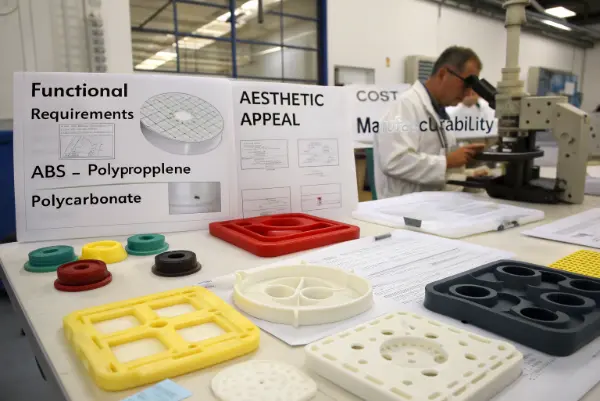
A Practical Guide to Material Selection
You need to think like an engineer and a business person at the same time. Ask yourself these questions.
1. What is the Part’s Job? (Functional Requirements)
This is the most important consideration. The material must be able to perform its intended function reliably over its expected lifespan.
- Mechanical Properties: Does it need to be hard and rigid like a TV remote casing (ABS)? Or flexible and tough like a living hinge on a bottle cap (Polypropylene)? Consider tensile strength, impact resistance, and hardness.
- Thermal Properties: Will the part be exposed to high temperatures, like a component near an engine (Nylon)? Or will it need to withstand freezing temperatures? Check the material’s heat deflection temperature and melting point.
- Chemical Resistance: Will it come into contact with oils, acids, or cleaning agents? For example, medical devices require materials that can withstand sterilization chemicals (Polycarbonate or PEEK).
2. How Should it Look and Feel? (Aesthetic Requirements)
The appearance of your product is critical for consumer perception.
- Color: Do you need a specific color? Some materials are easier to color than others.
- Transparency: Does the part need to be clear like a food storage container (Polycarbonate or PET)?
- Surface Finish: Are you aiming for a high-gloss, textured, or matte finish? The material choice directly impacts the final surface quality.
3. What is Your Budget? (Cost Considerations)
Material cost is often a significant portion of the final part price.
- Commodity Plastics (e.g., PP, PE, PS): These are inexpensive and used for high-volume, everyday items.
- Engineering Plastics (e.g., ABS, PC, Nylon): These offer better mechanical and thermal properties at a moderate cost.
- High-Performance Plastics (e.g., PEEK, Ultem): These have exceptional properties but come with a very high price tag, reserved for specialty applications like aerospace or medical implants.
Here is a simplified comparison of some common materials to get you started:
| Material | Key Properties | Common Uses | Relative Cost |
|---|---|---|---|
| Polypropylene (PP) | Flexible, fatigue resistant, cheap, food-safe | Containers, living hinges, car parts | $ |
| ABS | Strong, impact resistant, good surface finish | LEGO bricks, electronics housings | $$ |
| Polycarbonate (PC) | Very tough, transparent, heat resistant | Eyeglass lenses, water bottles, CDs | $$$ |
| Nylon (PA) | Strong, abrasion resistant, good for bearings | Gears, fasteners, fabric | $$$ |
Start by defining your “must-have” properties, then find the most cost-effective material that meets them.
What Are the Most Common Defects and How Can You Avoid Them?
Your first batch of molded parts has arrived, but when you inspect them, you find ugly sink marks, incomplete shapes, and thin, web-like flash. These defects can bring your production to a halt, wasting money and time. It’s a common nightmare for designers. But what if you could anticipate these problems and design your parts in a way that prevents them from ever happening?
The most common injection molding defects include flash, sink marks, short shots, and warp. These are often caused by issues in part design, mold design, or processing parameters. You can avoid them by following key design principles: maintain uniform wall thickness to prevent sinks and warp, add draft angles for easy ejection, and correctly size gates and runners to ensure the mold fills completely, preventing short shots and flash.
A Proactive Approach to Defect Prevention
Instead of reacting to defects, you should design to prevent them. This mindset is called Design for Manufacturability (DFM). It means thinking about the molding process while you are still designing your part. Here’s a breakdown of the top culprits and how to design around them.
1. Sink Marks & Voids
- What they are: Small craters or depressions on the surface of the part (sinks), or air bubbles trapped inside (voids).
- The Cause: They happen when a thick section of plastic cools and shrinks more than the surrounding thinner sections, pulling material inward.
- How to Prevent: The golden rule is uniform wall thickness. If you need to add strength, use ribs instead of making the entire wall thicker. A good rule of thumb is to make the rib thickness about 50-60% of the wall thickness it’s attached to. This provides support without creating a thick mass of plastic that will cause a sink mark.
2. Warping
- What it is: The part twists or bends out of its intended shape after cooling.
- The Cause: Non-uniform cooling and internal stresses caused by variations in shrinkage. This is often a direct result of non-uniform wall thickness.
- How to Prevent: Again, maintain uniform walls. Also, add reinforcing ribs and gussets to large, flat areas to increase stiffness without adding mass. Ensure your design allows for a logical and even cooling channel layout in the mold.
3. Flash
- What it is: A thin, unwanted layer of plastic that appears on the edge of a part, usually where the two mold halves meet.
- The Cause: The mold isn’t held together tightly enough to resist the injection pressure, allowing plastic to leak out. This can be a processing issue (not enough clamp tonnage) or a mold issue (worn-out parting line).
- How to Prevent (from a design perspective): While mostly a process/mold issue, designing a part with a simple, flat parting line makes it easier for the mold maker to create a suitable seal, reducing the chances of flash.
Here’s a quick reference table for your design process:
| Defect | Primary Design Cause | Design Solution |
|---|---|---|
| Sink Marks | Non-uniform wall thickness (thick spots) | Maintain uniform walls; use ribs for support. |
| Warping | Non-uniform wall thickness; large flat areas | Maintain uniform walls; add ribs and gussets. |
| Short Shot | Walls too thin; long flow paths | Increase wall thickness; place gate centrally. |
| Weld Lines | Holes or obstructions in the flow path | Reposition features; use a hot-runner system. |
By thinking about these potential issues during the design phase, you transition from being just a product designer to a true manufacturing-aware engineer.
RFQ and Feasibility
The customer supplies CAD, drawings, resin or performance intent, volumes, CTQs, appearance, assembly, regulatory needs and timing. The supplier reviews moldability, machine fit, cavities, mechanisms, testing and assumptions, then returns a quotation whose scope can be compared.
DFM, Material and Tool Approval
Teams close wall, draft, parting, gates, vents, cooling, ejection, shrinkage and tolerance questions. They approve exact resin grade, color and surface zones, then review the mold architecture, build schedule, ownership and change process.
Tool Build and T1 Learning
Steel or rapid tooling is machined, finished, assembled and dry-cycled. T1 or early trials reveal flow, cavity balance, pressure, cooling, ejection, dimensions and appearance. Samples and reports should distinguish tool corrections from process adjustments and product changes.
Validation and Production Release
Production-like runs establish material handling, process center, limits, cycle, inspection, function, packaging and traceability. Deviations are documented and closed. Approval should show that the tool and process can repeat the accepted part, not only make one good sample.
Manufacturing, Delivery and Support
First-off checks, SPC, preventive maintenance, lot control, cavity records, packaging and shipment protect ongoing supply. Forecast, spare inserts, tool storage, engineering changes and customer feedback keep the program controlled after launch.
Plastic Injection Molding From RFQ to Finished Shipment: Buyer Review Checklist
- Issue an RFQ with CAD, drawings, material intent, volume, CTQs and timing.
- Approve DFM, exact resin, surface zones, tool architecture and ownership.
- Use T1 evidence to separate tool, process and product corrections.
- Validate production-like process limits, function, inspection and packaging.
- Control forecast, maintenance, traceability, shipment and engineering changes.
Frequently Asked Questions
What makes an injection molding RFQ complete?
Current CAD and drawings, material or performance needs, volumes, CTQs, appearance, assembly, timing, quality and regulatory requirements.
When is a molded part ready to ship?
After the approved material, process, inspection, functional and packaging requirements are met and the lot is traceable under the agreed quality plan.
Conclusion
Understanding the full injection molding cycle—from clamping and injection to cooling and ejection—is fundamental. We’ve seen how each stage impacts the final quality of your part. By choosing the right material and designing proactively to prevent common defects, you take control of the manufacturing process. This knowledge empowers you to create better, more cost-effective products and collaborate more effectively with your manufacturing partners.