
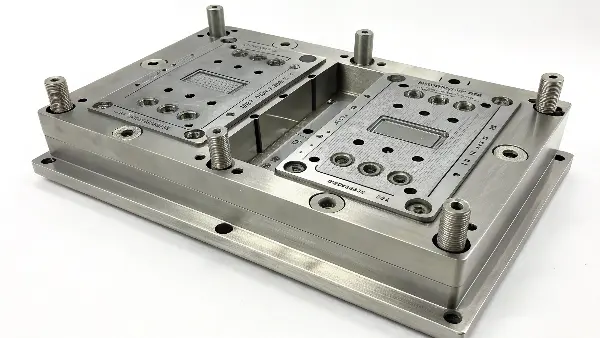
Standard mold bases work for many jobs, but what about tiny, complex medical parts or intricate electronic housings? Using a generic base might lead to tolerance issues, rejects, and headaches you don’t need.
Often, yes. For high-precision medical and electronics components demanding tight tolerances, specific material compatibility (like stainless steel), cleanroom suitability, or enhanced durability against abrasive resins, a specialized mold base offering superior materials, tighter manufacturing tolerances, and specific features is crucial for consistent, high-quality production.
What Makes Up a Mold Base, Anyway?
Designing a part without knowing how the mold base holds everything together can be risky. You might overlook critical support needs or ejection constraints, leading to tooling problems later. Understanding the basic anatomy is essential for any designer.
A standard mold base consists of several core components: the A and B plates (holding cavity/core), support plates/pillars, guide pins and bushings for alignment, the ejector system (retainer/box, pins, return pins), a locating ring for press alignment, and a sprue bushing.
Think of the mold base as the frame or chassis that holds all the critical, custom parts of your injection mold. It ensures everything aligns correctly and functions reliably cycle after cycle. Here are the main parts you’ll find:
- A-Plate (Cavity Retainer Plate): This plate holds the cavity half of the mold (where the external shape of the part is formed). It also houses the locating ring and the sprue bushing. Its accuracy is key for initial alignment.
- B-Plate (Core Retainer Plate): This plate holds the core half (forming the internal shape) and the bushings for the guide pins. Its alignment with the A-plate is critical for part tolerance and preventing flash.
- Support System (Support Plates, Pillars, or Rails): Located behind the B-plate, these components provide crucial support against the high pressures of injection molding, preventing the B-plate from flexing. They also create the necessary space (the “ejector housing” or “box”) for the ejector system to operate.
- Guide Pins & Bushings: These precision-ground components ensure the two halves of the mold align reliably every time they close. Good alignment prevents damage to the core/cavity and is essential for part accuracy, especially with complex geometries the project stakeholder might design.
- Ejector System: This assembly is responsible for pushing the finished part out of the mold. It typically includes:
- Ejector Plate: Pushes the ejector pins forward.
- Ejector Retainer Plate: Holds the heads of the ejector pins.
- Ejector Pins (or Sleeves/Blades): The actual components that contact and push the part.
- Return Pins: Ensure the ejector system retracts fully before the mold closes again.
- Sprue Puller Pin: Helps pull the sprue out of the bushing.
- Locating Ring (Register Ring): A ring on top of the A-plate that aligns the entire mold base with the platen of the injection molding machine.
- Sprue Bushing: A hardened insert where the machine nozzle seats, providing the channel for molten plastic to enter the mold runner system.
-
Clamping Plates/Slots: The outermost plates or features used to clamp the mold into the molding machine. Understanding these parts helps designers like the project stakeholder anticipate how the mold functions and where potential issues related to precision might arise if components aren’t up to spec.
Component Group Key Parts Primary Function Importance for Precision Mold Halves Mount A-Plate, B-Plate Hold Cavity & Core Inserts Accurate positioning of forming surfaces Alignment System Guide Pins, Guide Bushings Align Mold Halves during Closing Prevents flash, ensures tolerance, avoids damage Support Structure Support Plates, Pillars, Rails Resist Injection Pressure, Create Ejector Space Prevents mold flex, maintains parallelism Ejection System Ejector Plates (Plate/Retainer), Ejector Pins, Return Pins Eject Finished Part Consistent ejection without part damage Machine Interface Locating Ring, Sprue Bushing, Clamping Plates/Slots Align Mold in Press, Plastic Entry, Secure Mold Mount Proper machine setup, reliable plastic feed Why Do Standards Like DME Matter for Precision Molds?
Ever received mold components that just don’t fit quite right, or struggled to find replacement parts? Inconsistent sizing causes delays and costs money, especially when dealing with high-precision requirements. This is where industry standards bring much-needed order and reliability.
Mold base standards, like those from DME, HASCO, MISUMI, or LKM, define precise dimensions, tolerances, material specs, and naming conventions for components. This standardization ensures interchangeability, predictable performance, easier design, and reliable sourcing – all vital for high-precision molding.

Imagine trying to build a complex machine if every nut and bolt was a slightly different size. That’s the problem mold base standards solve. Companies like DME (Dayton Mold Engineering), HASCO, MISUMI, LKM, and others established standardized systems for mold base sizes and components. Here’s why this is critical, especially for precision work:
- Interchangeability: This is a huge benefit. If a guide pin wears out on a DME standard base, you can order a replacement DME pin knowing it will fit correctly (assuming the base itself hasn’t worn excessively). This simplifies maintenance and reduces downtime dramatically. No need for custom machining every time a standard part fails.
- Predictable Dimensions & Tolerances: Standards specify not just the overall size (like a DME “1012” base being roughly 10 inches by 12 inches), but also the locations and tolerances of key features like guide pins, bushings, bolt holes, and leader pin holes. For precision molds, knowing that plates are ground flat and parallel within a tight tolerance, and that guide components fit precisely, is essential for achieving accurate parts.
- Design Efficiency: For designers like the project stakeholder using CAD software, standard mold base libraries are readily available. He can select a standard size and configuration, knowing the dimensions are reliable, which speeds up the design process significantly.
- Reliable Sourcing: Standards create a competitive market for components. You can often source standard pins, bushings, plates, etc., from multiple suppliers, leading to better availability and potentially better pricing, while still maintaining compatibility.
-
Global Collaboration: Using internationally recognized standards (like DME primarily in North America/inch-based systems, and HASCO often in Europe/metric-based systems) makes collaboration easier between designers, mold makers, and molders located in different regions. While there are different standard systems, the core principle is consistency. DME, for example, uses a numbering system often indicating approximate width and length in inches. HASCO uses metric dimensions and a different coding system (e.g., K-series). The key isn’t which standard, but that a recognized standard is used, especially when precision and component replacement are factors.
Feature DME Standard Focus HASCO Standard Focus Benefit of Standardization Origin/Units North America / Inch based Europe / Metric based Global recognition within respective regions Sizing Often numeric code (e.g., 1012 ≈ 10″x12″) Often letter/number code (e.g., K-Type) Predictable overall dimensions Components Standardized pins, bushings, plates, etc. Standardized pins, bushings, plates, etc. Interchangeability, simplified replacement Tolerances Defined tolerances for key features Defined tolerances for key features Ensures alignment and precision Design Widely available CAD libraries Widely available CAD libraries Faster, more reliable mold design Adhering to these standards provides a baseline of quality and predictability that’s essential when building molds for parts where every micron counts.
What Makes a Mold Base ‘Specialized’ for Demanding Applications?
For everyday parts, a standard mold base made from common steel like P20 or 1045 might be reliably adequate. But when the project stakeholder designs a tiny medical device component requiring biocompatibility or a complex electronic connector needing extreme dimensional stability and wear resistance, a standard base might fall short.
Specialized bases for medical/electronics often use higher-grade materials (stainless steel like 420SS for medical; high-hardness pre-hardened steels for abrasive resins), tighter manufacturing tolerances on plates and guide components, enhanced or specialized cooling circuits, features for cleanroom compatibility, and sometimes specific surface treatments.
When standard isn’t good enough, you need features specifically tailored to the challenges of medical or high-precision electronics molding. Here’s what often sets these specialized bases apart:
- Superior Materials:
- Medical: Stainless steel (like 420SS, Stavax ESR) is often mandatory. It offers excellent corrosion resistance (vital for sterilization processes like autoclaving and preventing rust contamination), requires no plating (eliminating flaking risks), and is generally considered more biocompatible.
- Electronics: Components often use engineering resins filled with glass fibers or other abrasive materials. Specialized bases might use higher hardness pre-hardened steels (like improved P20 grades or even tool steels like H13 for inserts within the base) to resist wear and maintain tolerances over long production runs.
- Tighter Manufacturing Tolerances: This is critical. Specialized bases are manufactured to much tighter specifications for:
- Plate Flatness & Parallelism: Minimizes flex and ensures consistent shut-off.
- Perpendicularity: Ensures components mount accurately.
- Guide Pin/Bushing Fit: Reduces play between mold halves, directly impacting part tolerance and minimizing wear. Closer fits mean better alignment.
- Enhanced or Optimized Cooling: Precise temperature control is often vital for dimensional stability in tight-tolerance parts. Specialized bases might incorporate more complex cooling channel layouts, use materials with higher thermal conductivity in certain areas, or be designed to easily accommodate conformal cooling inserts.
- Cleanroom Compatibility Features: For medical molding especially:
- Material Choice: Stainless steel or appropriate plating on other steels.
- Sealed Designs: Ejector systems might be sealed to prevent lubricant leakage or particle ingress/egress.
- Surface Finish: Smoother finishes can be easier to clean and less likely to trap contaminants.
- Minimized Grease Points: Using self-lubricating bushings or specific designs.
-
Surface Treatments: While stainless often avoids plating, other specialized bases might utilize coatings like Nickel plating (for corrosion resistance on non-stainless steels) or hard chrome/nitriding on specific components for enhanced wear resistance. These features add cost, but they directly address the risks associated with high-precision molding: tolerance stack-up, material incompatibility, contamination, and premature wear. for the project team’s demanding applications, specifying these features in the mold base provides a much more robust and reliable foundation.
Feature Category Specific Enhancement Benefit for Medical Apps Benefit for Electronics Apps Materials Stainless Steel (e.g., 420SS) Corrosion resistance, Cleanability, Biocompatibility Sometimes used if corrosive additives present High-Hardness Steel (Improved P20, H13 inserts) Less common unless abrasive fillers used Wear resistance against abrasive resins (e.g., glass-filled) Manufacturing Tolerances Tighter specs on flatness, parallelism, pin/bushing fit Ensures precision alignment, minimizes flash/variation Critical for tight tolerance parts, connector interfaces Cooling Optimized layouts, High-conductivity inserts Consistent part shrinkage, dimensional stability Prevents warpage, manages heat from fast cycles Cleanroom Features Sealed Ejector System, Smooth Surfaces, No Plating (SS) Reduces contamination risk, easier cleaning/sterilization Less critical, but cleanliness can aid assembly Surface Treatments Nickel, Hard Chrome, Nitriding (on non-SS components) Corrosion resistance (if SS not used), wear resistance Enhanced wear resistance for moving parts, some corrosion
Connect Application Risk to the Tooling Record
For medical or electronic components, define material traceability, critical dimensions, appearance zones and required reports through the quality-assurance plan. The mold-base specification should support those controls without implying that tooling alone establishes product compliance.
Medical and electronics plastic parts may need specialized mold base decisions because the parts often involve tight assembly, clean surfaces, inserts, small features, thin walls, flame-retardant materials or controlled cosmetic areas. A generic mold base may work for simple parts, but higher-risk projects need closer review.
Medical-Related Parts
Medical-related parts may require precise dimensions, clean handling, material documentation and validation samples. The mold base should support stable ejection, clean surfaces, serviceability and consistent cooling. Regulatory requirements must be defined by the buyer before tooling.
Electronics Parts
Electronics housings, connectors and enclosures often include bosses, snap fits, vents, inserts, thin walls and cosmetic surfaces. Mold base structure must support alignment, shutoffs, sliders and lifters without creating flash or assembly issues.
Material-Specific Requirements
Flame-retardant resins, glass-filled materials, PC/ABS, transparent materials or high-temperature plastics may affect steel, venting, cooling and mold deposits. The mold base and tooling details should reflect the resin, not just the part size.
Validation for High-Risk Parts
Samples should be checked for dimensions, assembly, cosmetic quality, functional features and material requirements. For medical and electronics parts, approval should be documented carefully because small defects can affect downstream assembly or compliance.
Project-Specific Buyer Checklist
- Application requirements defined
- Material and documentation needs confirmed
- Insert/slider/lifter risk reviewed
- Critical dimensions marked
- Validation plan agreed
How CKMOLD Would Review the Project
CKMOLD would start by reviewing CAD files, drawings, material requirements, expected quantity, cosmetic requirements and any existing sample or defect history. From there, the discussion moves into mold structure, production risk, validation method and whether the tooling scope matches the real business stage of the project.
FAQ
Do medical parts need special molds?
Some do, depending on tolerance, cleanliness, material and validation requirements.
Why are electronics parts challenging?
They often include thin walls, bosses, snap fits, vents, inserts and cosmetic requirements.
Does flame-retardant material affect tooling?
Yes. It can affect venting, deposits, processing and steel considerations.
Who defines regulatory requirements?
The buyer should define final market and compliance requirements.
Can CKMOLD review medical or electronics tooling risk?
Yes. CKMOLD can review DFM, mold base, material and validation needs.
Conclusion
So, while standard mold bases are the workhorses of the industry, don’t overlook specialized options for medical and electronics. The right base, built with superior materials and to tighter standards, provides the crucial foundation needed for precision, reliability, and quality.
Primary References for This Topic
- FDA: Basics of Biocompatibility Assessment — Biocompatibility is assessed for the finished device in its intended contact—not inferred from the polymer family name alone.
- FDA: Component and Device Documentation Examples — Supplier, formulation, processing and sterilization changes may affect the comparability of medical-device evidence.
- ISO 13485:2016 — The medical-device QMS standard provides the regulatory-quality context for risk management, traceability and process validation.