
You are constantly under pressure to find materials that are strong, safe, and cheap. It is a hard balance to strike. If you pick the wrong material for your car parts, you face expensive recalls and unhappy customers. But you also need to keep your production costs low to make a profit.
Polyethylene can provide toughness, chemical resistance and low density for selected automotive reservoirs, ducts, covers, liners or protective components. Its suitability depends on the vehicle zone, temperature, load, pressure, fluids, UV, impact, creep and assembly. Calling a material safe without defining the component’s function and failure consequence is not an engineering conclusion.
Related engineering resources: DFM analysis | production injection molding | mold testing and validation
Polyethylene (PE), specifically High-Density Polyethylene (HDPE), is extremely safe and durable for automotive use. It offers excellent impact resistance, which protects passengers during crashes, and it is chemically resistant to fuels and oils. For durability, it withstands harsh weather and road salt without corroding like metal, making it a top choice for fuel tanks and exterior components.
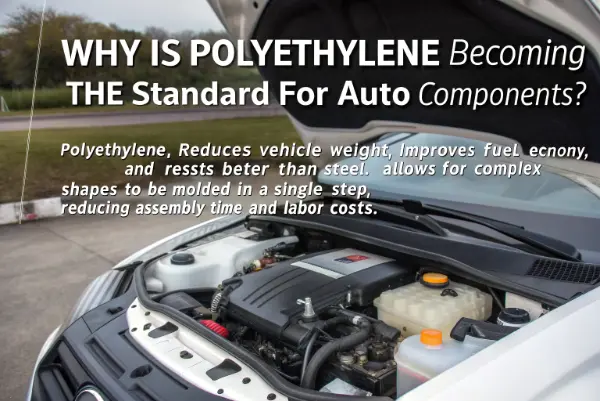
Why Is Polyethylene Becoming the Standard for Auto Components?
Many manufacturers worry that switching to plastic will make their products look “cheap.” You might feel that metal is the only way to show quality. However, sticking to old materials can make your cars heavier and less fuel-efficient than your competitors.
Polyethylene is becoming the standard because it significantly reduces vehicle weight, improves fuel economy, and resists corrosion better than steel. It allows for complex shapes to be molded in a single step, which reduces assembly time and labor costs for your factory.
But it is not just about weight. It is about noise and vibration too. Metal parts tend to rattle. They transmit vibration from the road into the cabin. Polyethylene naturally dampens this vibration. This makes the ride quieter and smoother for the end-user.
Here is a breakdown of the core benefits:
| Feature | Benefit for Manufacturer | Benefit for Driver |
|---|---|---|
| Low Density | Lower shipping costs, material savings | Better gas mileage |
| Corrosion Resistance | Fewer warranty claims from rust | Longer vehicle lifespan |
| Vibration Dampening | Less need for rubber insulators | Quieter cabin ride |
| Design Flexibility | Combine multiple parts into one mold | Sleek, modern designs |
How Does Polyethylene Improve Fuel Tank Safety?
You might think that a plastic gas tank sounds like a terrible idea. Fire and plastic usually do not mix well. It is a common fear that a plastic tank will melt or explode in a crash, putting lives at risk.
Polyethylene fuel tanks are safer than steel tanks because they are seamless and seamless construction prevents leaks during a crash. HDPE can deform and absorb the energy of an impact without rupturing, whereas steel tanks can spark or split open at the seams.
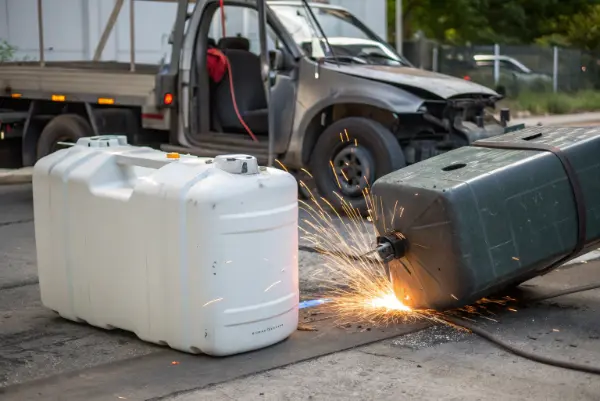
Polyethylene changed everything. We use a process called blow molding to create these tanks. This means the tank is one single piece. There are no seams to split.
Also, modern fuel creates problems for metal. Ethanol blends attract moisture. HDPE does not corrode. To make it even safer, manufacturers use multi-layer technology. They sandwich a barrier layer between layers of PE to stop gas fumes from permeating through the plastic.
Key Safety Features of PE Fuel Tanks:
- Impact Resilience: Bounces back after minor hits.
- Fire Safety: Low thermal conductivity means heat transfers slower to the fuel than with metal.
- Shape Optimization: You can mold the tank to fit into odd spaces under the car, keeping the center of gravity low.
- No Sparks: Plastic does not spark during a collision.
Is Polyethylene Durable Enough for Exterior Parts?
You face a lot of questions about how plastic handles the weather. Will the bumper fade in the sun? Will it crack in the winter? If the exterior parts look bad after three years, your brand reputation takes a hit.
With the right UV stabilizers, Polyethylene is extremely durable for exterior parts and can outlast painted metal in harsh environments. It resists stone chips, road salt, and moisture, ensuring the vehicle maintains its appearance for years.
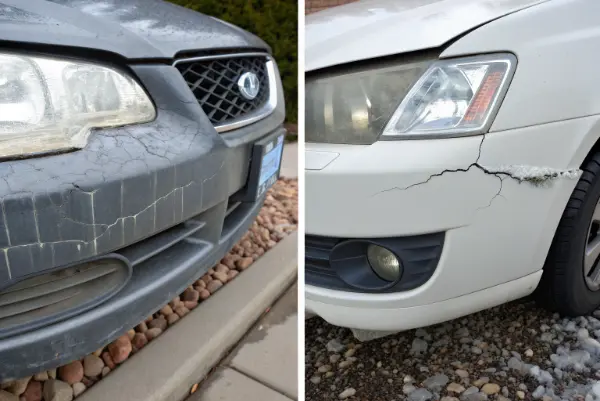
I often get asked by business owners like the buyer, “Jerry, won’t this plastic turn brittle in the freezing cold?” It is a valid concern. Standard plastics can shatter in freezing temperatures. However, Polyethylene has a very low glass transition temperature. This means it stays flexible even when it is well below freezing.
Think about the wheel arch liners and mudguards. These parts take a beating. They get hit by rocks, ice, salt, and sand at 60 miles per hour. If these were made of rigid plastic or painted metal, they would chip immediately. Once metal chips, it rusts. PE absorbs the impact of the stone. It might scratch, but it will not chip or rust.
The sun is the other enemy. UV rays break down plastic chains. Project teams should add “Carbon Black” or specific UV inhibitors to the raw material before molding. If you do this, the part can sit in the Arizona sun for a decade without degrading.
However, you must be careful with design. Polyethylene expands and contracts with heat more than metal. If you bolt a long PE trim piece tightly to a metal door, and the car sits in the sun, the plastic will expand and bow because it has nowhere to go. In my mold designs, I generally include slotted holes or floating clips. This allows the material to move without warping.
Durability Checklist
- Impact Strength: Excellent. It absorbs energy rather than cracking.
- Chemical Resistance: High. Road salts and tar removers do not hurt it.
- UV Stability: Good, if additives are used.
- Scratch Resistance: Moderate. It is softer than metal, so it scratches, but the color goes all the way through, so scratches are less visible.
How Does HDPE Compare to Other Automotive Plastics?
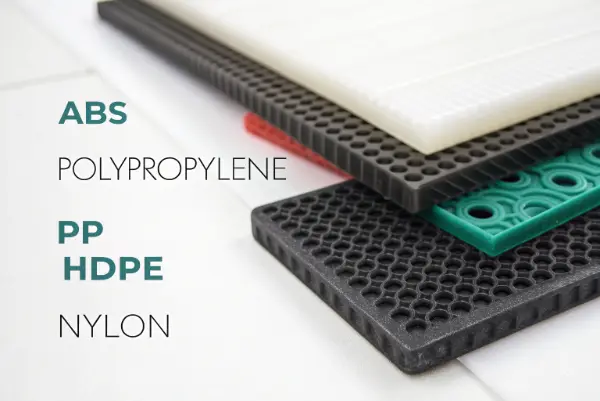
There are hundreds of plastics out there. You might be looking at ABS, Polypropylene (PP), or Nylon. It is confusing to know which one gives you the best return on investment. You do not want to overpay for a material you do not need.
HDPE is generally tougher and more chemically resistant than ABS or PP, making it better for functional parts like tanks and reservoirs. While it is not as stiff as Nylon, it is much cheaper and lighter, offering the best value for non-structural components.
Here is how I break it down for my clients.
HDPE vs. Polypropylene (PP):
PP is the main competitor. PP is stiffer and handles higher heat. That is why you see PP on engine covers and interior dashboards. However, HDPE is tougher at low temperatures. If the part is on the outside of the car in a cold climate, HDPE is often safer against cracking.
HDPE vs. Nylon (PA):
Nylon is the “strong man.” It is used for parts that need to hold a lot of weight or sit right next to the hot engine block. But Nylon is expensive. It also absorbs water from the air, which changes its size. HDPE is stable and cheap. If the part does not need to hold up an engine, do not waste money on Nylon. Use HDPE.
HDPE vs. ABS:
ABS is great for painting and gluing. It looks pretty. But it is brittle compared to HDPE. For parts that are hidden or need to take a beating (like fender liners), HDPE is the winner.
Cost is huge here. HDPE is a commodity resin. It is widely available and the price is usually stable. For a mid-sized manufacturing company, saving a few cents per pound on raw material adds up to thousands of dollars a year.
| Material | Best For | Weakness | Relative Cost |
|---|---|---|---|
| HDPE | Fuel tanks, fluid reservoirs, liners | Low heat resistance, hard to paint | $ |
| Polypropylene (PP) | Bumpers, interior trim | Can be brittle in extreme cold | $ |
| ABS | Interior panels, decorative parts | Poor chemical resistance | $$ |
| Nylon (PA) | Under-hood gears, intake manifolds | Absorbs moisture, expensive | $$$ |
What Are the Mold Design Challenges for Polyethylene?
You have decided to use PE. Now you need to make the mold. If the mold is designed wrong, you will get parts that are warped or act strange. This ruins your production schedule and wastes money on bad samples.
Polyethylene has a high shrinkage rate, typically between 1.5% and 3%, which causes warping if the mold cooling is not reliably balanced. You must design cooling channels carefully and use uniform wall thickness to ensure the part stays within tolerance.
If one side of your part cools faster than the other, the part will curl like a potato chip. This is called warping.
The Golden Rule: Uniform Wall Thickness
I tell every engineer: keep your walls the same thickness everywhere. If you have a thick section next to a thin section, the thick part cools slower. It pulls on the thin part. This creates internal stress. If you need strength, use ribs, do not make the wall thicker.
Cooling is Key
In the mold, we drill water lines to cool the plastic. With PE, these lines need to be aggressive. We need to pull heat out evenly. If the mold is hot in one corner, that corner shrinks more. I often use Beryllium Copper inserts in corners because they transfer heat very fast. It costs a bit more upfront, but it saves you from throwing away thousands of warped parts later.
Ejection Issues
Because PE is soft and tough, it can stick to the mold. It does not slide off as easily as hard plastics. We need to put in plenty of ejector pins. We also need to make sure the “draft angle” (the slope of the walls) is large enough so the part can slip out without drag marks.
Surface Finish
PE is waxy. It is hard to get a high-gloss “piano black” finish on it. It prefers a textured finish. If you try to polish the mold to a mirror finish, you might actually see flow marks or weird swirls. A light texture hides these defects and makes the part look premium.
Here is a troubleshooting guide I use:
- Defect: Part is bowed (Warping).
- Fix: Check cooling lines. Is one side hotter?
- Defect: Sink marks (Dents in thick areas).
- Fix: Reduce wall thickness, use packing pressure.
- Defect: Flash (Plastic leaking at edges).
- Fix: PE flows very easily. Clamp pressure on the machine must be high.
Release PE by Vehicle Zone and Failure Mode
Evidence from one polyethylene application should not be transferred automatically to another. A multilayer blow-molded fuel system, an injection-molded wheel-arch liner and an interior storage bin have different constructions, loads, environments and approval paths. Classify the component before using a durability or safety claim.
| Vehicle context | Questions to close | Useful release evidence |
|---|---|---|
| Exterior or underbody | Impact at low temperature, stone strike, UV, road fluids, attachment creep | Aged molded parts, impact/retention tests, color and surface limits |
| Interior non-safety part | Heat cycle, odor/emissions, scratch, assembly, rattle and appearance | OEM material/part tests, dimensional fixtures and boundary samples |
| Fluid-adjacent component | Exact medium, permeation, swelling, stress cracking, temperature and joint design | Exposure under representative stress plus leak or functional testing |
| Structural or safety-relevant interface | Load case, creep, crash/event rate, joint retention and failure consequence | Assembly-level validation and program-specific approval |
Record the resin manufacturer and grade, color/additives, recycled-content restrictions, part thickness, weld-line position, conditioning and cavity identity with the test result. This prevents a generic statement such as “PE is durable” from replacing evidence for the released component.
When requesting a tooling review, provide the vehicle zone, failure modes, exact grade, drawing CTQs, exposure list and validation plan through the CKMOLD RFQ.
Classify the Vehicle Zone
Separate interior, exterior, underbody, fluid-handling, under-hood and hidden protective uses. Record continuous and peak temperature, vibration, stone impact, UV, fuels, oils, cleaners, salts and pressure. Each zone changes the required PE grade and validation plan.
Design for Creep and Thermal Movement
PE can deform under sustained load and expands differently from metals or other plastics. Use supported walls, ribs, radii, appropriate fastener interfaces and realistic clearance. Check long-term clamp, seal and dimensional retention rather than relying only on short tensile data.
Control Stress Cracking and Chemical Exposure
Surfactants, fluids, residual stress and notches can combine to create environmental stress cracking. Avoid sharp corners and highly stressed press fits. Test the exact grade, process and chemical mixture under representative stress and temperature.
Manage Shrinkage and Weld Lines
Gate, flow, cooling and packing influence warpage, dimensions and local strength. Locate weld lines away from pressure, attachment or impact zones. Use cavity-level measurement and conditioning so fit decisions reflect production variation.
Validate the Complete Vehicle Interface
Test impact, vibration, thermal cycling, fluids, UV, leakage, pressure, fasteners, clips and assembly as relevant. Include neighboring components and installation variation. Release should be based on component performance in context, not a general property claim.
Polyethylene in Automotive Parts: Buyer Review Checklist
- Define vehicle zone, temperature, vibration, impact, UV, fluids and pressure.
- Evaluate creep, thermal expansion, seals, fasteners and supported load paths.
- Test environmental stress cracking with representative chemicals and stress.
- Control gate, weld lines, shrinkage, cooling, conditioning and cavity variation.
- Validate the full assembly under vehicle-relevant aging and installation.
Frequently Asked Questions
Is polyethylene suitable for under-hood automotive parts?
Only for applications whose temperature, fluids, load and life fit the exact grade. Many under-hood uses require careful material comparison and testing.
Why is creep important for PE automotive components?
Sustained clamp, pressure or attachment loads can change dimensions or sealing over time, especially at elevated temperature.
Can chemical resistance be judged from one fluid?
No. Real mixtures, cleaners, stress, heat and exposure time can interact. Test the intended service environment.
Conclusion
Polyethylene is a powerhouse material for the automotive industry. It solves the heavy weight problem, fights off rust, and keeps passengers safe during crashes. While it presents some challenges in molding due to shrinkage, these can be easily managed with the right expertise. For a business owner like you, choosing PE means delivering a durable, high-quality product while keeping your manufacturing costs in check. It is a smart, long-term investment for your production line.