
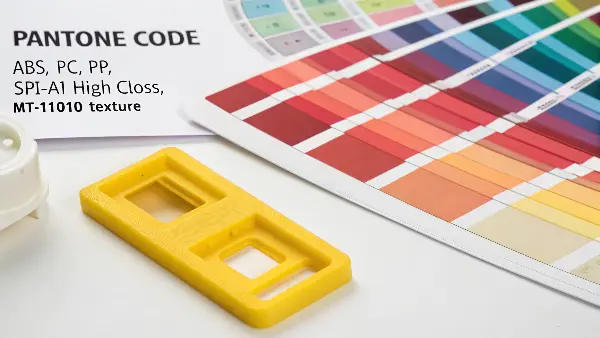
A color reference helps communicate the intended appearance, but a screen image or Pantone code alone cannot define the finished molded color. Agree the library and identify the physical reference, then approve a sample in the specified resin, thickness, texture and viewing conditions.
Related CKMOLD resources: production injection molding, mold design, mold testing and validation.
Pantone provides identified color references within different libraries and physical media. A complete code helps the customer, compounder and molder discuss a target, but it is not a pigment formulation for every resin. Establish an approved molded standard and acceptance method for the actual product.
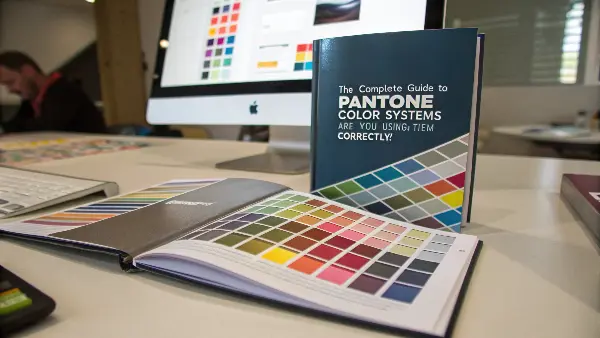
What is the Pantone Color System and How Does It Work?
Pantone assigns identifiers within specific color-reference systems. Communicate the full code and library, and distinguish a printed swatch from a plastic standard. The compounder and molder still need an approved physical sample and an acceptance method for the actual part.
For plastics, use the appropriate Pantone plastic color reference where available. A reference chip supports communication; it does not eliminate differences caused by resin, pigment loading, surface finish, wall thickness or illumination.
A Physical Reference Must Match the Intended Medium
A current physical reference is normally more useful than an uncalibrated screen. It must come from the agreed library and use the intended medium. A printed C/U chip, FHI paper/cotton reference and polypropylene Plastic Standard Chip are not interchangeable final-part standards.
Communication Through Codes in Pantone Color Systems
Communicate the full identifier, library and product identification rather than a name such as “forest green.” Record the physical reference and any agreed translation into the selected plastic. The approval sequence below separates choosing a target from accepting a production part.
| Stage | Customer and supplier decision | Required evidence |
|---|---|---|
| Reference | Agree the complete code, library, product identification and physical medium. | Identified reference available to both parties |
| Material translation | Develop a color in the nominated resin, additives and concentration. | Formulation identification and representative molded plaque or part |
| Approval | Agree viewing and measurement conditions and allowable variation. | Signed master sample, measured data or limit samples as specified |
| Production | Control material, process, surface and comparison method. | Lot results against the approved standard and a reaction plan |
What Are the Main Pantone Reference Families Used Here?
Pantone libraries are not interchangeable. PMS Graphics (including Coated/Uncoated) is organized for graphics and print. Color Bridge compares spot colors with process-print simulations. Fashion, Home + Interiors uses its own references, while Pantone Plastic Standard Chips provide polypropylene physical chips matched to PMS or FHI colors and use PQ-prefixed identifiers.
Record the full code, suffix and reference product. For an injection-molded part, use that reference to develop an approved standard in the actual resin and surface; a polypropylene chip does not prove that another polymer will reproduce identically.
What’s the Difference Between the RAL and Pantone Color Systems?
Pantone and RAL each contain distinct reference families, with different media and numbering rules. Specify the requested collection rather than substituting a conversion chart. The current RAL CLASSIC collection lists 216 shades (checked November 2026); this count does not describe all RAL collections or every plastic-reference product.
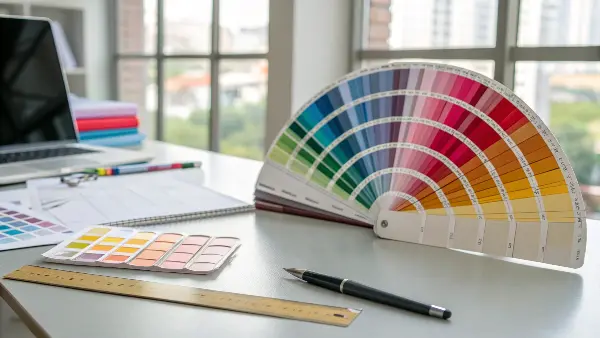
The World of RAL
- RAL CLASSIC: This is the system you’ll encounter most often. It uses a simple four-digit code, where the first digit signifies the color family (e.g., 1 for yellow, 7 for grey). For example, RAL 7016 is Anthracite Grey, a very common color for window frames and machine enclosures.
- RAL DESIGN and EFFECT: These are distinct collections with their own identifiers. RAL EFFECT combines solid and metallic colors; consult RAL’s official palette overview for the specific collection and reference format.
Application is the Deciding Factor
Think of it this way: If your project involves a logo, packaging, or a consumer-facing product for which branding will be important, then you’ll likely be using Pantone. If it involves industrial machinery, architectural elements, or powder-coated metal parts, you will likely be working with RAL. As a product owner, you may need to navigate both. For example, the plastic housing for your electronic device might be a Pantone color, while the metal stand it sits on could be a RAL color.
| Decision | Pantone | RAL |
|---|---|---|
| Identify the family | Graphics, FHI and plastic references have different media and identifiers. | CLASSIC, DESIGN SYSTEM plus and EFFECT have different numbering and ranges. |
| Record the code | Use the full identifier and suffix from the agreed reference. | State the collection as well as the complete code. |
| Translate to the part | Approve the target in the intended resin, thickness and finish. | Approve the target in the intended resin, thickness and finish. |
| Substitution | A nearest-match conversion is a proposal requiring approval. | It does not replace the specified physical standard. |
Color approval also depends on the application. Compare medical, automotive and electronics evidence in the industry-specific masterbatch requirements guide. Environmental claims need a separate evidence review; see the lower-impact color-masterbatch options and trade-offs.
What is the Science Behind the Pantone Matching System?
The Pantone Matching System (PMS) is a type of system that is a product of color science. In essence, the main idea of PMS is to standardize color reproduction based on various materials and processes. Here’s how it works.
Coated and uncoated references do not necessarily look alike. Pantone explains that C and U describe the paper condition and that ink interaction with the substrate changes appearance. A paper reference can communicate a target, but plastic approval must account for the resin, colorant, thickness, finish and viewing conditions.
RGB values describe a display signal and CMYK describes process-print channels within a defined reproduction workflow. A named physical color reference serves a different communication role. None of these alone guarantees an identical result in another medium; record profiles where relevant and verify the actual molded color under agreed conditions.
How Should Digital Pantone Libraries Be Controlled?
Software availability and library versions can change. Record the Pantone code, library and product identification, source file color space/profile and physical reference instead of relying on an unnamed built-in swatch. A digital display is a preview; production approval remains tied to the agreed physical/molded standard and viewing method.

How Do You Use Pantone Colors Correctly in Plastic Injection Molding?
Specify the full color reference, exact resin grade, wall thickness, opacity and finish. Request a representative plaque or part in the intended formulation and surface before production approval. Use that sample with the agreed viewing and measurement method; a code by itself does not define the finished molded appearance.
Key Factors That Influence Color in Plastics
The reference substrate and the molded material can differ in opacity, base color and surface. Record these differences before interpreting a visual or instrument comparison.
- Base resin and additives: Record the actual grade and formulation. Natural tint, fillers, stabilizers and recycled content can change appearance; do not assume every ABS or PC grade has the same base color.
- Surface finish and texture: Gloss and texture change how light is reflected and scattered. Compare the actual molded surface; the direction or size of the visual shift is not universal for every color and finish.
- Wall thickness: Thickness changes the optical path and can alter translucency or color, particularly in translucent materials. Compare the actual thicknesses against the approved molded standard; the direction and size of the shift are not universal.
- Coloring route: The formulation may use a masterbatch, a precolored compound or another controlled coloring system. Specify the route, compatible carrier where relevant, concentration, dispersion and supplier controls; changing the coloring route requires revalidation.
The Professional Workflow for Color Approval
To avoid costly mistakes, follow this professional process:
- Provide the Full Specification: Start with the Pantone code (e.g., PANTONE 294 C), but also provide the exact material (e.g., Covestro Bayblend FR3010 PC/ABS) and the surface finish code (e.g., VDI 3400 Ref 27).
- Use an agreed plastic reference where available: Identify the specific reference product and complete code. A polypropylene reference chip does not replace approval in a different production resin or surface.
- Approve a representative molded standard: Agree the resin, color formulation, concentration, surface and viewing method for the sample. Record approval and allowable variation before production release; a single visual comparison does not establish ongoing process control.
Specify the Color Standard Before Tool Trials
The RFQ or drawing should state full reference code/library and product identification, resin grade, wall and cosmetic zones, texture/gloss, opacity, illuminants, measurement geometry and tolerance or limit sample. Approve a molded standard before production and define how supplier/customer masters are stored and replaced.
Reference identification must match the actual product supplied. Pantone explains that an edition notation is no longer used for its current graphics guides; record the library, code, product identification and physical reference condition instead of inventing an edition number. See also Pantone plastic references, numbering conventions and graphics reference products.
Choose the Correct Pantone Reference
Identify the exact Pantone library, coating condition and swatch version. Coated and uncoated references can appear different because the surface changes reflection. Record the code, product identification or physical standard used for the project so the supplier and customer are looking at the same target.
Separate Digital Color From Physical Color
RGB and CMYK values describe display or print reproduction, not the final plastic. A screen can be affected by monitor calibration, viewing conditions and color profile. Use a physical reference and molded plaques when the part color is important.
Translate the Target Into a Compound
The compounder or masterbatch supplier should match the target in the selected resin and concentration. Resin natural color, opacity, filler, recycled content and UV stabilizer can shift the result. A color match made in one polymer is not automatically transferable to another.
Control Surface and Viewing Conditions
Gloss, texture, gate, flow lines, weld lines and wall thickness change perceived color. Define viewing light, angle, background, part location and comparison method. A textured black part and a polished plaque may have different visual readings even with similar pigment.
Approve a Molded Color Standard
Use production-like resin, mold surface, wall thickness, process and color concentration for the master sample. Retain the approved plaque or part, record measurement data where useful and define acceptable variation by appearance and instrument method.
Pantone Color Systems for Injection Molded Parts: Buyer Review Checklist
- Record Pantone library, code, swatch condition, product identification and physical reference.
- Do not use RGB or CMYK alone to specify molded plastic color.
- Match pigment or masterbatch in the exact resin, filler, opacity and process.
- Define texture, gloss, lighting, viewing angle, wall and surface comparison conditions.
- Approve and retain a molded color standard with production-like conditions.
FAQ
Does a Pantone code alone define the final molded color?
No. Resin, pigment, wall, texture, gloss, processing and lighting influence the result; a molded standard and acceptance method are needed.
Should a Pantone coated or uncoated guide be used for plastic?
Select the reference that best represents the intended visual condition, then confirm it with a physical molded sample rather than relying on the label alone.
Conclusion
Use a complete reference and a documented translation into the intended resin, finish and process. Approve and retain a representative molded standard, define viewing and measurement conditions, and control changes. That creates a usable acceptance basis for the customer and supplier.