
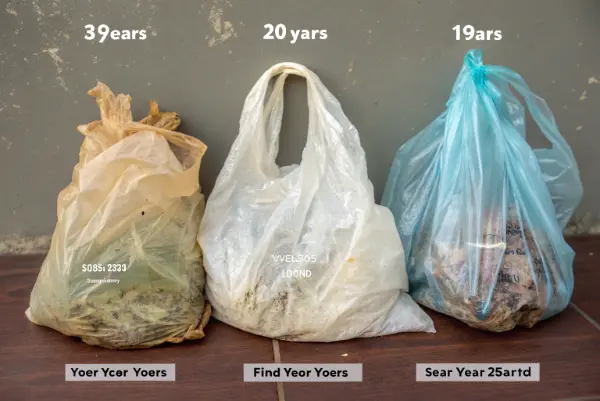
Can Biodegradable Polyethylene Really Solve Our Plastic Waste Crisis?

We all know the guilt of seeing plastic waste pile up in our factories and landfills. As business owners and manufacturers, we face immense pressure to be sustainable, but traditional plastics like polyethylene just stick around forever. It feels like a losing battle between profitability and responsibility.

Biodegradable polyethylene is an innovative form of plastic designed to break down much faster than conventional polyethylene (PE). By incorporating specific additives or modifying the polymer structure, this material can decompose under natural conditions like composting or landfill environments. It offers manufacturers a way to maintain the durability and versatility of standard PE while significantly reducing the long-term environmental footprint of their products.

Biodegradable polyethylene pellets and finished products

It sounds almost too good to be true, doesn’t it? A material that acts like the plastic we rely on but disappears when we are done with it. However, the reality is a bit more complex than just switching suppliers. I have spent years in the mold industry, and I have seen materials come and go. Let’s dig into what this actually means for your production line.

What Exactly Makes Polyethylene "Biodegradable"?

You see "biodegradable" stamped on packaging everywhere, but what does it mean chemically? It is easy to get confused by greenwashing and marketing terms that hide the truth. If you don’t understand the science, you might end up paying more for a material that doesn’t actually help the planet.

Biodegradable polyethylene works by adding pro-degradant additives to the standard polymer chain or by using bio-based feedstocks that mimic PE properties. These additives weaken the strong carbon bonds in the plastic when exposed to heat, light, or oxygen (oxidation). Once these bonds break, microbes can digest the smaller fragments, converting the plastic into water, carbon dioxide, and biomass.

Chemical structure breakdown of biodegradable polyethylene

Let’s break this down further because the devil is in the details. Standard Polyethylene (PE) is incredibly tough because of its long, stable chains of molecules. That is why we love it for manufacturing durable parts. Making it biodegradable means we have to sabotage that stability on purpose, but only after the product has served its purpose.

There are generally two main routes to achieve this, and understanding the difference is crucial for your molding process:

1. Oxo-Biodegradable Additives

This is the most common method I have seen in the industry. Manufacturers take standard PE resin and mix in metal salts (like cobalt or manganese).

  • How it works: These salts act as a catalyst. When the plastic sits in the sun (UV light) or heat, the salts trigger oxidation.
  • The Result: The plastic becomes brittle and shatters into microscopic pieces.
  • The Catch: Some argue this just creates microplastics rather than fully disappearing. You need to be careful about local regulations regarding "oxo-degradables."

2. Bio-based Polyethylene

This is different. Instead of oil or gas, the ethylene comes from renewable sources like sugarcane or corn.

  • How it works: The chemical structure is identical to oil-based PE, but the source is green.
  • The Catch: "Bio-based" does not always mean "Biodegradable." Some sugarcane PE is just as durable as oil PE. You must specifically look for compostable or biodegradable grades.
Feature Standard PE Oxo-Biodegradable PE Bio-Based PE (Green PE)
Source Fossil Fuels Fossil Fuels + Additives Plants (Sugarcane/Corn)
Durability Very High High (until triggered) High
End of Life Landfill/Recycle Fragmentation Recycle (usually)
Cost Low Low to Medium Medium to High

When I started CKMOLD, I had a client who insisted on "green plastic." We tried an additive-based PE. It molded perfectly, but we had to be very careful with our storage temperatures so the degradation didn’t start in the warehouse!

Is Biodegradable PE Compatible with Existing Injection Molds?

Changing materials usually gives production managers a headache. You worry about shrinking rates, cycle times, and whether you need to spend thousands on new tooling. If this green material requires a completely new mold design, it probably isn’t financially viable for most of us.

The good news is that biodegradable polyethylene is generally highly compatible with existing injection molds designed for standard PE. Since the base polymer remains largely the same, the shrinkage rates and flow characteristics are very similar. You typically do not need to re-tool, though minor adjustments to processing temperatures and cooling times might be necessary.

Injection molding machine processing biodegradable plastic

This is a huge relief for business owners like you and me. However, "compatible" does not mean "identical." Based on my experience running my own mold trading company, here are the critical factors you need to watch out for when switching to biodegradable grades.

Temperature Sensitivity

This is the biggest trap. Standard PE is forgiving. You can overheat it a bit, and it will still flow. Biodegradable PE, especially those with pro-degradant additives, is sensitive to heat history.

  • The Risk: If you leave the material in the barrel too long (long residence time), it might start degrading inside the machine.
  • The Fix: You need to optimize your cycle times. Do not let the material sit idle. I once had a technician pause a machine for lunch without purging the barrel. When he came back, the biodegradable material had degraded and clogged the nozzle. We lost hours of production.

Shrinkage and Warpage

While generally similar to standard PE, the additives can slightly alter the crystalline structure of the plastic as it cools.

  • Observation: You might see slightly different shrinkage rates, perhaps a variance of 0.1% to 0.3%.
  • Action: If you have high-precision parts with tight tolerances, run a small trial batch first. You might need to adjust the packing pressure to compensate.

Moisture Control

Some bio-based additives attract moisture more than standard oil-based PE.

  • The Issue: Wet material leads to splay marks (silver streaks) on your final product.
  • The Solution: Drying is non-negotiable. Even if you don’t usually dry your PE, you should dry biodegradable grades to ensure a perfect surface finish.

Here is a quick checklist for your molding floor:

  1. Purge Completely: Clean the barrel thoroughly before and after running biodegradable runs.
  2. Lower Temps: Start at the lower end of the recommended temperature range.
  3. Monitor Regrind: Be careful mixing regrind (recycled scrap) back in. The heat history creates a compounding effect that degrades the material faster.

Does Biodegradable PE Cost More Than Traditional Plastic?

We are running businesses, not charities. Even if we want to save the world, we have to keep the lights on and pay our employees. The biggest objection to sustainable materials is almost always the price tag.

Currently, biodegradable polyethylene does cost more than traditional polyethylene, typically ranging from 20% to 50% higher depending on the specific technology used. However, as production scales up and regulations tax non-degradable plastics, the price gap is narrowing. Additionally, the marketing value of "sustainable products" often allows for a higher retail price point.

Cost comparison chart of plastics

Let’s look at the numbers honestly. Yes, the raw material cost per pound is higher. But raw material is only one part of your total part cost. When I consult with clients at CKMOLD, I help them look at the "Total Landed Cost."

The Direct Material Cost

If you buy standard HDPE pellets for roughly $0.80 – $1.00 per pound (prices fluctuate, of course), a biodegradable alternative might cost you $1.20 – $1.50 per pound.

  • Impact: For a small part weighing 10 grams, the increase is fractions of a penny.
  • Impact: For a large housing weighing 500 grams, the cost increase is significant.

The Hidden Savings (and Costs)

  • Waste Disposal: In some regions, manufacturing waste from biodegradable materials is cheaper to dispose of than industrial plastic waste.
  • Cycle Time: If the biodegradable material requires a longer cooling time, your machine time cost goes up. This is why testing is vital.
  • Marketing Leverage: This is where you make your money back. Consumers—and large B2B buyers—are actively searching for green suppliers.

Market Trends

We are seeing a shift. Governments are starting to implement "Extended Producer Responsibility" (EPR) laws. This means you, the manufacturer, are responsible for the disposal of your packaging.

  • Scenario A: You pay a tax on every pound of standard plastic you sell.
  • Scenario B: You use biodegradable plastic and are exempt from the tax.

Suddenly, the "expensive" biodegradable plastic becomes the cheaper option for the overall business model.

I remember helping a client who made disposable cutlery. Their margins were razor-thin. They switched to biodegradable PE. Their material costs went up 30%, but they were able to land a contract with a major eco-conscious restaurant chain that refused to buy standard plastic. Their volume tripled. Sometimes, the cost isn’t just about the pellet price; it’s about the opportunity cost of not switching.

How Long Does It Actually Take to Decompose?

If you sell a product claiming it is biodegradable, your customers will expect it to disappear in their garden compost pile in a few weeks. If it doesn’t, you face a PR nightmare. Managing expectations is critical.

The decomposition time for biodegradable polyethylene varies wildly, from a few months to several years, depending heavily on the environment. In a controlled industrial compost facility with high heat and humidity, it can break down in 3-6 months. However, in a cold landfill or the ocean, the process slows down significantly and may take years.

Timeline of decomposition in different environments

This is the most critical section for you to understand to avoid false advertising. "Biodegradable" is not a magic switch. It is a biological process that needs specific ingredients: Heat, Moisture, and Microbes.

The Environmental Variables

  1. Industrial Composting (The Ideal Scenario)

    • Conditions: Temperatures reached 50°C-60°C (122°F-140°F), high humidity, aerated piles.
    • Result: Rapid breakdown. The polymer chains snap, and bacteria feast.
    • Timeframe: 90 to 180 days.
  2. Home Composting

    • Conditions: Lower temperatures, variable moisture.
    • Result: Much slower. Many "biodegradable" plastics will simply sit there for a long time in a home compost bin because it doesn’t get hot enough.
    • Timeframe: 1 year to never, depending on the additive grade.
  3. Landfill (The Reality)

    • Conditions: No light, very little oxygen (anaerobic).
    • Result: Most degradation stops. Even a banana peel can last decades in a sealed landfill. Biodegradable PE might not degrade at all here, or worse, it might degrade anaerobically and release methane, a potent greenhouse gas.
  4. Marine Environment

    • Conditions: Cold, salty water.
    • Result: Very slow. Do not market these plastics as "safe for the ocean" unless they are specifically certified for marine degradation (which is rare for PE).

Certification Matters

To protect your business, do not just take your material supplier’s word for it. Look for certifications.

  • ASTM D6400: Standard specification for labeling of plastics designed to be aerobically composted.
  • EN 13432: The European standard for compostability.

If your material supplier cannot provide a datasheet proving compliance with these standards, do not use it. I always tell my clients: "Trust, but verify." You do not want to be the business owner explaining why your "eco-friendly" bottle is still floating in a river ten years later.

Conclusion

Biodegradable polyethylene represents a massive step forward for our industry, bridging the gap between performance and sustainability. It allows us to keep using the injection molding machinery we already own while offering products that are kinder to the planet. While it costs a bit more and requires careful handling during production, the long-term benefits for your brand reputation and compliance with future laws are undeniable. Just remember to be transparent about how it degrades—honesty is the best policy in manufacturing.

Facebook
Twitter
LinkedIn

Request A Quote for Your Projects!

Hi there! I’m Jerry, a proud dad and passionate at CKMOLD. With years of hands-on experience in the injection mold and CNC industry, I’ve grown from managing the smallest details on the shop floor to leading international projects with clients across Europe and the U.S.

At CKMOLD, we specialize in precision molds, plastic parts, and CNC solutions that help bring bold product ideas to life. I love solving complex challenges, building long-term partnerships, and pushing the limits of what great manufacturing can do.

Let’s connect, exchange ideas, and grow together—whether you’re looking for a reliable manufacturing partner or just want to talk shop!

Request a Quick Quote

Send your drawings and detailed requirements via:
Email: jerry@ckmold.com

Or fill out the contact form below:

We will contact you within one working day. Please pay attention to the email with the suffix “@ckmold.com”

Wait, We Have Something Special for You!

Join our mailing list and receive a 10% discount on your next mold or CNC project.