
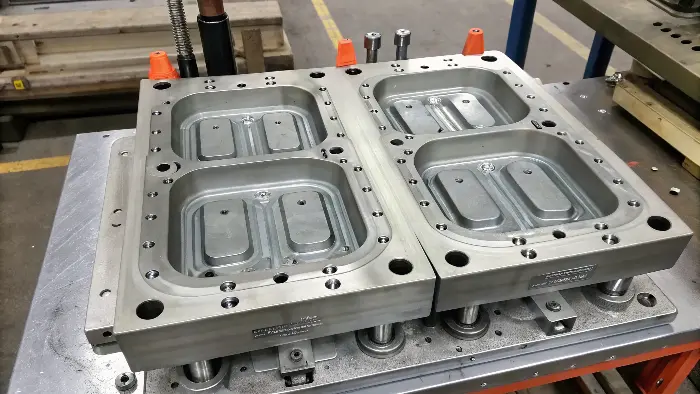
Quick answer: A mold timeline should be a dependency-based milestone plan, not one promised completion date. Buyer decisions on product, resin, appearance, mold concept and DFM must close before dependent steel work; purchased components, machining, fitting, trial preparation and corrective loops each need evidence and named approval.
The Injection Molding DFM Guide: From CAD Review to Steel Release connects geometry, tooling and approval as one process. The narrower task here is buyer milestones between DFM and T1.
Start With Inputs and Decision Dates
List controlled CAD, drawing, resin, volume, cavities, tool life, target machine, surface, validation and launch date. Identify unknowns that require product testing or supplier decisions. The schedule should show when each input is needed to avoid rework.
Assign one owner and response time for buyer approvals. Calendar duration often grows while steel waits for a late color, texture, insert or design decision.
Gate DFM and Mold Design
DFM closes mold direction, walls, draft, parting, gates, actions, CTQs and correction strategy. Mold design then defines feed, cooling, ejection, support, machine interfaces, purchased components and maintenance. Use formal review records and released revisions.
Allow overlapping work only where interfaces are stable and risk is understood. Starting cavity steel while product geometry is open can create false progress.
Track Material and Long-Lead Components
Confirm steel ordering, certificates, heat treatment, hot runner, cylinders, sensors, mold base and special connectors. Track approval drawings and delivery against the design dependency. A late hot runner can block final cavity and wiring work.
Separate supplier lead time from internal machining. Record substitutions and their technical approval; a quicker component that changes envelope or performance can move delay into assembly.
Engineering Scope
| Milestone | Buyer evidence | Dependency |
|---|---|---|
| DFM release | Controlled part, risks and accepted concept | Product and requirement baseline |
| Mold-design release | Assembly, interfaces, BOM and review closure | Gate, cavities, actions, steel and machine |
| Build readiness | Material/components received and routing confirmed | Long-lead items and frozen interfaces |
| T1 readiness | Assembled tool, checks, resin, machine and trial plan | Dry cycle, circuits, hot runner and measurement |
Illustrative Timeline Dependency
Illustrative engineering example—not a claimed CKMOLD customer result: A hot runner has an eight-week lead time, but gate location is not approved. The schedule makes gate approval a buyer milestone before manifold release and allows unrelated mold-base work to proceed. It does not report the entire tool as on schedule while the critical feed-system dependency remains open.
Use Manufacturing Milestones
Track rough machining, heat treatment, datum finishing, CNC, EDM, grinding, polish/texture, fitting and in-process inspection for critical components. Report completed evidence, not an optimistic percentage. Identify the current critical path and recovery owner.
Buyer updates should show approved changes, affected steel and forecast T1. Photographs can support status but do not replace dimensions, hardness or functional checks.
Prepare T1 Before Assembly Ends
Reserve the compatible machine, resin, dryer, controller, robot support, gauges and engineering attendance. Define T1 objectives, short shots, process records, sample quantity, cavities, dimensions, appearance and function. Confirm shipping time if the trial plant differs from the toolroom.
Dry-cycle actions and ejector, test circuits and hot runner, inspect steel and close safety or interference findings before resin enters the mold.
Plan Correction Loops and Approval
Assume T1 creates learning. Define issue-review timing, correction authorization, next-trial criteria and commercial treatment for product changes. Distinguish tool completion from product and production approval.
After corrections, verify affected and neighboring features. Close final mold drawings, spares, reports, process, samples and shipping preparation. Protect launch with realistic contingency rather than hiding every learning loop inside one date.
Buyer-Owned Gates and Required Deliverables
A supplier can schedule machining, but the buyer still controls several decisions that determine whether the promised date is achievable. Put each approval, required evidence and response time into the project plan.
| Gate | Minimum evidence | Buyer decision |
|---|---|---|
| Product baseline | Released 3D, drawing, resin, finish, annual volume and critical requirements | Approve one controlled input set |
| DFM release | Parting, gate, undercuts, draft, wall risks, tolerances and open actions | Accept, revise or assign each risk |
| Mold design release | Layout, cavity count, steel, cooling, ejection, interfaces and purchased components | Authorize steel and dependent purchasing |
| Pre-T1 readiness | Assembly status, trial machine, material, measurement plan and trial objectives | Confirm that T1 can answer the intended questions |
| T1 disposition | Process record, cavity-labelled samples, dimensional and functional findings | Approve correction scope and the next evidence gate |
Late approval does not only move one date; it can invalidate material bookings, machine reservations and downstream inspection timing. Use the DFM sign-off checklist before steel release and the T1-to-production checklist for launch decisions. For exported tools, check machine and mold interfaces against the intended production site; EUROMAP’s public technical-recommendations catalogue includes machinery and peripheral interface documents; use only the recommendation that applies to the destination equipment.
Engineering Record Checklist
- List input, approval, build, trial and correction dependencies.
- Assign buyer owners and response dates for product decisions.
- Release DFM and mold design through controlled gates.
- Track steel, hot runner and long-lead components separately.
- Report manufacturing evidence and the current critical path.
- Reserve machine, resin, gauges and T1 plan before completion.
- Include issue review, correction and retrial loops.
- Close as-built documents, spares, validation and shipment separately.
Related Engineering Resources
Engineering Questions
How long does an injection mold take to build?
It depends on design maturity, size, cavities, actions, steel, purchased components, surface and validation. Use a project-specific dependency plan.
Can machining start before mold design is complete?
Some stable work may overlap, but starting dependent steel before interfaces are frozen creates rework risk that should be explicit.
What should a buyer receive in a progress update?
Milestone evidence, open approvals, critical path, changes, affected components, risk and forecast trial date.
Should the timeline include more than one mold trial?
Yes. Plan realistic learning and correction loops, while defining what each trial must prove.
Apply the Injection Mold Build Timeline review to your released design. Share the function, exact resin, annual volume, CTQs, cosmetic limits and launch timing through the CKMOLD project form. If CAD is relevant, send it directly to jerry@ckmold.com; the form does not require an upload.