Material
How to Choose the Right Plastic Material for an Injection Molding Project
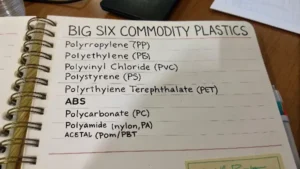
Choose an injection molding material with a requirements matrix covering environment, load, appearance, process, compliance, supply, cost and validation.

Choose an injection molding material with a requirements matrix covering environment, load, appearance, process, compliance, supply, cost and validation.
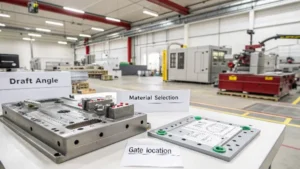
Learn how surface-finish engineering improves premium molded products through texture, polish, visual zones, secondary operations and inspection.
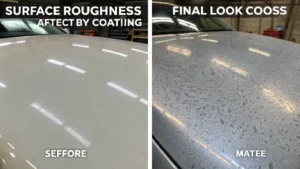
Understand how mold texture and polish influence paint, printing and plating through adhesion, release, draft, masking, gloss and inspection decisions.

Use a structured black-speck troubleshooting method with containment, evidence mapping, controlled tests, root-cause confirmation and corrective action.

Prevent polymer degradation with controls for moisture, melt temperature, shear, residence time, back pressure, regrind, venting and shutdown.

Build a maintenance program that reduces black specks by checking screw, barrel, non-return valve, nozzle, dead spots, wear, purge and verification.
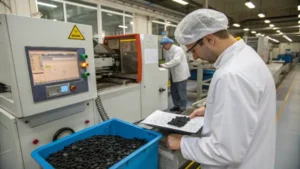
Prevent black specks before molding with controls for resin storage, drying, purging, hopper cleanliness, startup, dead spots, regrind and inspection.
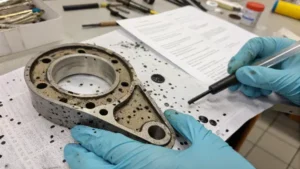
Diagnose black specks in molded parts by separating contamination, degraded resin, carbonized residue, colorant and mold or equipment sources with evidence.
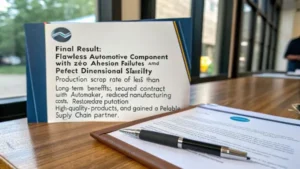
Plan automotive TPU overmolding by validating substrate compatibility, interface geometry, molding sequence, dimensional control, aging and production evidence.
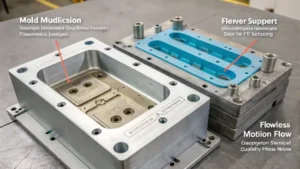
Learn how to design reliable TPE overmolding by controlling material compatibility, substrate preparation, mechanical locks, heat, flow, flash and bond testing.
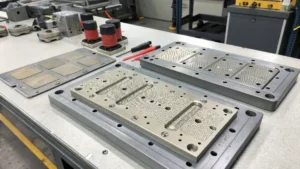
Design molds for TPE materials with practical guidance on draft, texture, gates, vents, shrinkage, cooling, ejection and tool maintenance.
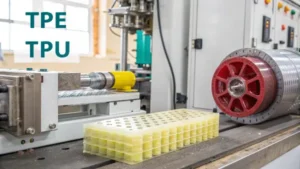
Master TPE injection molding parameters with a practical guide to drying, melt temperature, speed, pressure, cooling, shrinkage and validation.
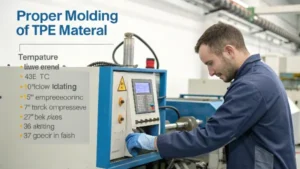
Select a TPE type by hardness, compression, tear, abrasion, heat, chemicals, bonding, appearance, process and end-use requirements.
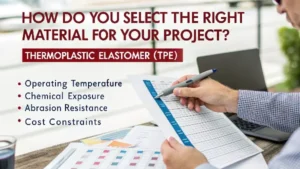
Compare TPE, TPR, TPU and TPV by chemistry, hardness, elasticity, abrasion, heat, chemical resistance, processing, bonding and applications.