Injection Molding
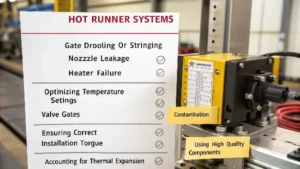
How to Choose the Right Hot Runner System for Your Application
Select a hot runner system by part geometry, resin, cavity count, gate type, thermal control, maintenance access, cycle and total cost.

Select a hot runner system by part geometry, resin, cavity count, gate type, thermal control, maintenance access, cycle and total cost.
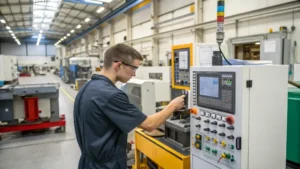
Compare jetting risks in PP, PE, ABS, PC, nylon and filled engineering plastics, with material-specific gate, temperature and drying guidance.

A practical method for precision mold temperature control using thermal targets, circuit design, sensor checks, flow measurement, trials and process records.
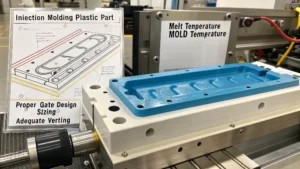
Learn how to eliminate injection molding jetting by diagnosing the flow front and correcting gate geometry, injection speed, temperature and venting.
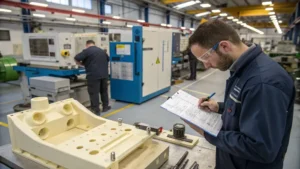
A practical framework for solving automotive injection molding warpage through material, flow, cooling, tooling, fixtures, measurement and validation.
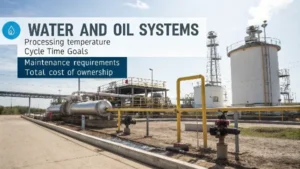
Choose an injection mold temperature control system by resin, mold temperature, flow, heat load, accuracy, monitoring, maintenance and production risk.
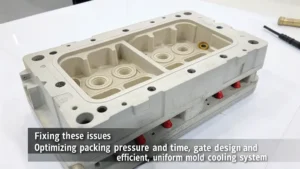
A practical method for reducing deformation in complex injection molded parts through defect mapping, DFM, trial planning, mold changes and verification.
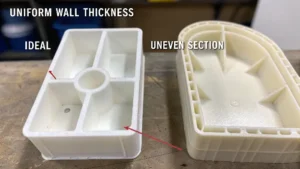
A thin-wall injection molding guide covering flow length, gate design, machine response, packing, cooling, ejection and metrology for stable parts.
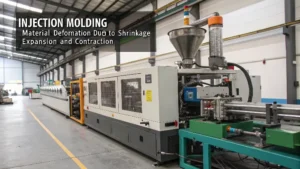
Learn how injection molding simulation predicts fill, packing, cooling and warpage, and how to use results responsibly in mold and part decisions.
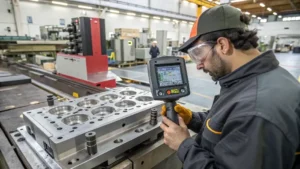
A practical injection mold cooling design guide covering circuit layout, flow balance, turbulent cooling, baffles, inserts, temperature control and validation.
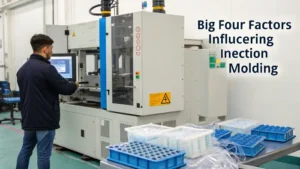
Understand how melt temperature, mold temperature, speed, pressure, holding and cooling affect injection molded part deformation and warpage.
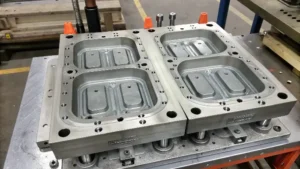
Plan an injection mold build from product baseline and DFM through mold design, machining, T1 evidence and buyer approval gates.
Learn how resin family, filler, shrinkage, moisture, grade and processing behavior affect injection molded part deformation and warpage.
Diagnose plastic part deformation by separating material shrinkage, cooling imbalance, residual stress, ejection, tooling and assembly causes.
Diagnose high-pressure injection molding problems by separating fill resistance, packing demand, venting, clamp force, material condition and measurement evidence.
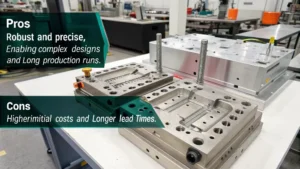
Review 10 practical benefits of high-pressure injection molding for precision parts, from thin-wall filling and repeatability to automation and scale.
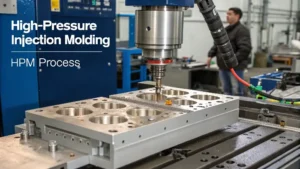
Compare high-pressure and low-pressure molding by part geometry, substrate protection, fill behavior, tooling, materials, output and application risk.

Use injection molding to consolidate parts and reduce assembly by comparing function, tooling actions, tolerance, serviceability, validation and lifecycle cost.

Learn how to evaluate major plastic mold markets by engineering capability, tooling quality, lead time, cost, export support and supply risk.
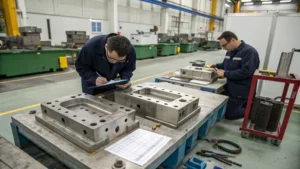
A practical glass-filled nylon injection molding guide covering fiber orientation, drying, shrinkage, wear, gates, cooling, warpage and inspection.