Design
Insert Molding Project Workflow From Design to Production
See how CKMOLD handles insert molding projects from DFM and insert design to mold building, loading method, trial validation and production control.

See how CKMOLD handles insert molding projects from DFM and insert design to mold building, loading method, trial validation and production control.
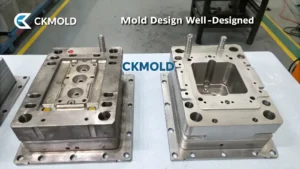
How CKMOLD approaches advanced ABS injection molding through DFM, material grade review, mold design, process windows and quality validation.
A practical guide to sustainable ABS injection molding through material selection, recycled ABS, scrap reduction, energy efficiency and mold design.
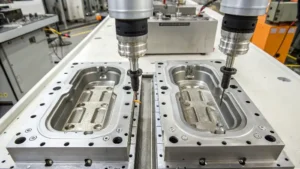
Control mold manufacturing with released CAD, program and electrode revisions, machine data, inspection, nonconformance, traceability and as-built records.

Troubleshoot common ABS injection molding defects such as sink marks, splay, burn marks, weld lines, warpage, flash and short shots.
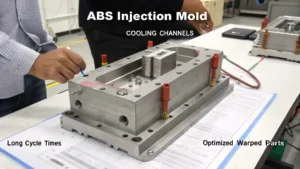
Key ABS injection mold design considerations for gates, runners, cooling, venting and ejection to improve appearance and dimensional stability.
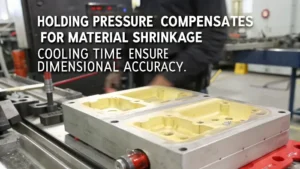
Build and validate an ABS injection molding process window by controlling material condition, melt and mold heat, fill, pack, cooling, venting and appearance.
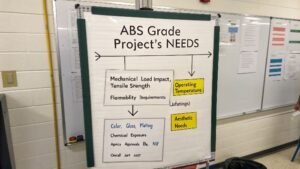
Compare ABS grades for injection molding and learn how to select material based on impact, heat resistance, flow, plating, flame rating and surface finish.
How CKMOLD supports optical-grade acrylic injection molded parts through DFM, mold polishing, gate strategy, drying control and inspection.
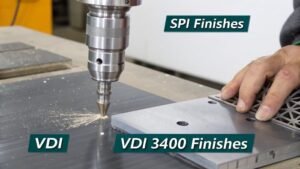
How CKMOLD achieves optical-grade PMMA surface finish through steel polishing, gate strategy, cleanliness, process control and inspection.
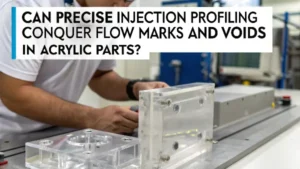
Improve PMMA clarity and dimensional stability with better drying, mold temperature control, polishing, gate design and stress management.
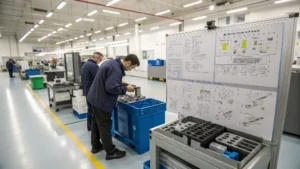
A practical guide to PMMA injection molding for clear parts, covering drying, mold polish, gate design, stress control and defect prevention.

Understand how micron-level precision in injection molded parts depends on mold steel accuracy, thermal control, measurement and process stability.

Plan precision injection molding tolerances around function, datums, conditioning, sampling, process capability and steel-safe correction.
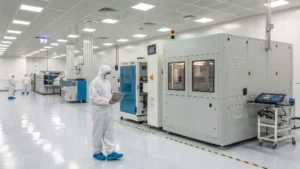
Explore key challenges in medical device injection molding, including material control, tolerances, documentation, cleanliness and validation planning.

Learn quality assurance practices for precision injection molded components, including inspection planning, process records and mold validation.
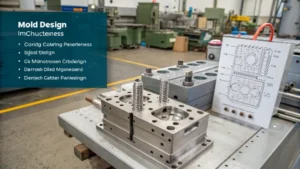
Use T1 measurement, resin, process and cavity evidence to plan steel-safe shrinkage corrections without applying one unsupported scale factor.

Practical ways to reduce the environmental footprint of injection molding through material choice, scrap reduction, energy control and tool design.
Understand where traditional injection molding reaches its limits and how DFM, rapid tooling, automation and advanced mold design improve results.

How CKMOLD controls shrinkage compensation for high-precision molds through DFM, material review, steel-safe design, trials and measurement feedback.