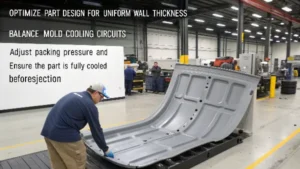
Injection Molding
How to Prevent Visible Weld Lines in Plastic Parts
Reduce visible weld lines through gate relocation, flow design, mold temperature, venting, material selection, texture and controlled processing.

Reduce visible weld lines through gate relocation, flow design, mold temperature, venting, material selection, texture and controlled processing.

Understand how flow fronts create weld lines, the effect on appearance and strength, and how gates, temperature, venting and geometry influence them.

Learn how resin viscosity, moisture, fillers, temperature, degradation and flash behavior change injection mold venting requirements.

A practical venting-design method covering vent location, depth, land, ejectors, inserts, overflow, flash control and maintenance.
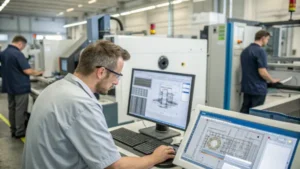
Understand how air, vapor and degradation gases behave during filling, and how venting affects burns, short shots, weld lines and quality.
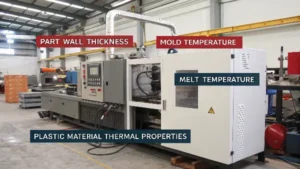
Understand the interaction between melt and mold temperature, injection and holding pressure, gate freeze, cooling time, shrinkage and warpage.
Learn how advanced temperature control uses balanced circuits, sensors, flow monitoring and closed-loop response to improve molding quality.
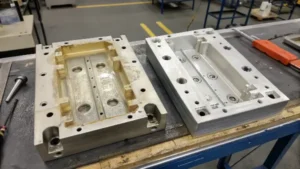
Diagnose short shots, flash, burn, splay, warpage, sink, brittleness and color variation caused by melt, mold or cooling temperature issues.
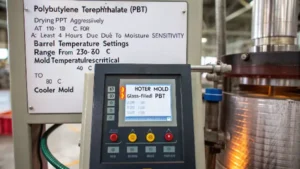
Compare the temperature and material-control challenges of PA, POM, PC and PBT injection molding, including drying, melt, mold and residence time.
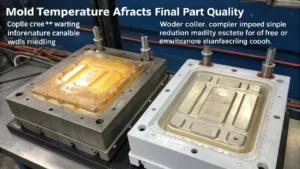
Learn how to establish a stable barrel, nozzle, melt, mold and cooling temperature profile for repeatable injection molding quality.
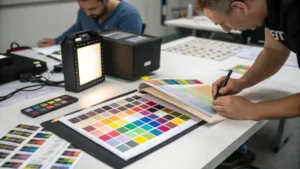
A production method for Pantone-matched molded parts covering material, masterbatch, plaques, process control, measurement, lighting and approval.

Understand why RGB and CMYK cannot directly define molded plastic color and how to convert digital artwork into a validated Pantone and masterbatch target.
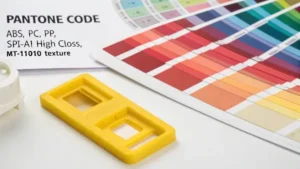
Learn how to use Pantone references for molded plastic parts, including swatch selection, material, masterbatch, surface, lighting and approval.
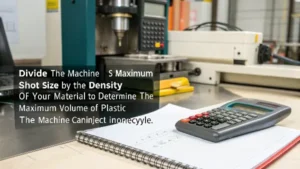
Learn how to calculate injection molding shot weight from part, runner, cavity count, density, machine capacity, cushion and process reserve.
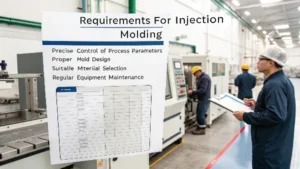
Understand the most important injection molding factors: material, mold, machine, process window, cooling, inspection and continuous control.
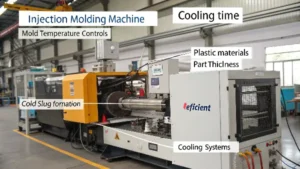
Learn what causes cold slug defects, how cold-slug wells and process settings help, and how to troubleshoot nozzle, runner, gate and material issues.
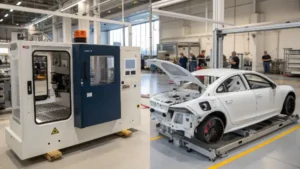
Compare 3D printing and injection molding for automotive parts by cost, validation, heat, durability, surface, volume, tooling and launch timing.
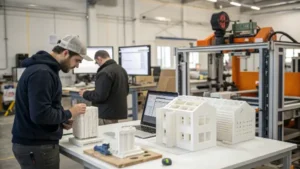
Choose between 3D printing and injection molding using volume, geometry, material, tolerance, surface, tooling, timing, quality and scale-up needs.
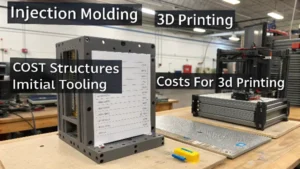
Calculate the breakeven point between 3D printing and injection molding using tooling, part cost, labor, post-processing, quality and volume scenarios.

Evaluate Mexico for injection molding using location, volume, labor, tooling, logistics, material, quality, border and supply-chain requirements.