
Injection Molding
Why Injection Molding Works Well for Mass Production
Learn why injection molding fits mass production through controlled cycle economics, repeatability, automation, material choice, quality and supply planning.
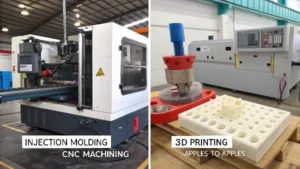
Learn why injection molding fits mass production through controlled cycle economics, repeatability, automation, material choice, quality and supply planning.
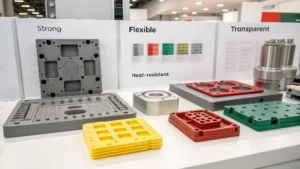
Review the main advantages and tradeoffs of injection molding, including speed, repeatability, material choice, tooling investment, automation and cost.
Plan molding capacity with validated cycle, active cavities, OEE losses, yield, changeovers, maintenance, downstream constraints, peaks and recovery.

Improve high-volume molding ROI through tool amortization, cavity and cycle optimization, yield, automation, OEE, quality, maintenance and supply planning.
Choose injection molding by modeling tooling, unit cost, demand, design maturity, lead time, inventory and break-even against CNC, printing or casting.

Decide whether low-volume injection molding fits your project by comparing quantity, tooling, material, quality, lead time, part complexity and total cost.

Use a structured black-speck troubleshooting method with containment, evidence mapping, controlled tests, root-cause confirmation and corrective action.
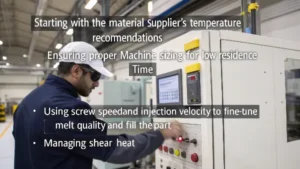
Prevent polymer degradation with controls for moisture, melt temperature, shear, residence time, back pressure, regrind, venting and shutdown.

Build a maintenance program that reduces black specks by checking screw, barrel, non-return valve, nozzle, dead spots, wear, purge and verification.
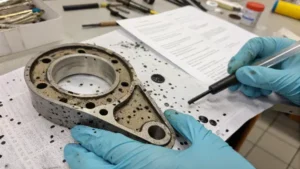
Diagnose black specks in molded parts by separating contamination, degraded resin, carbonized residue, colorant and mold or equipment sources with evidence.
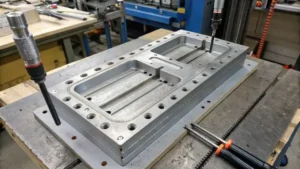
Learn how to choose a parting line that protects appearance, draft, shutoffs, ejection, slides, tolerances, tool cost and production maintenance.
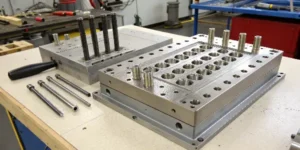
Diagnose ejector-pin marks on automotive molded parts by mapping defects, checking release force, cooling, packing, draft and the ejection support system.
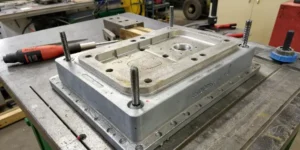
Understand how resin shrinkage, stiffness, filler, friction, crystallinity, moisture and temperature change ejector force and pin-mark risk.
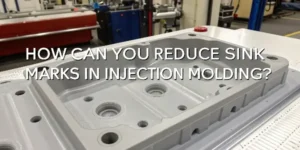
Diagnose ejector pin marks by mapping cavity location, release load, cooling, packing, pin support, timing, surface condition and part handling before correction.
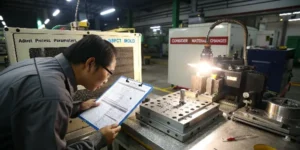
Diagnose ejector-pin marks by separating ejection force, part rigidity, pin layout, cooling, draft, packing, wear and processing causes.
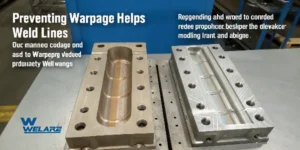
A practical hierarchy for eliminating or reducing weld lines through geometry, gate strategy, material, temperature, venting, flow and validation.
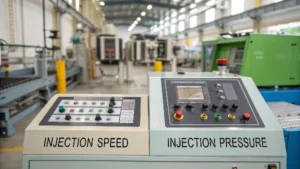
Learn how Mold Flow predicts air traps, last-fill regions, pressure and weld lines to guide vent locations and trial validation.
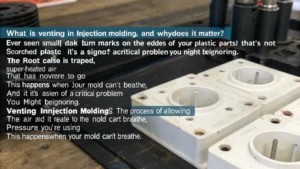
Understand the interaction of injection speed, pressure and mold venting in short shots, flash, burns, weld lines, warpage and surface quality.
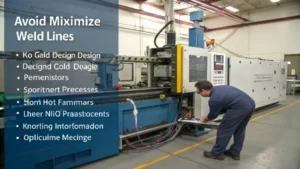
Build a weld-line strength test plan using representative specimens, tensile or impact tests, aging, comparison data and acceptance criteria.
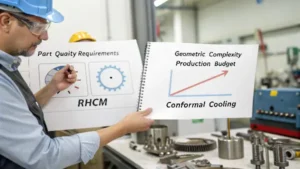
Learn how mold-temperature uniformity affects weld-line appearance and strength, and how to combine thermal control with gates, venting and material.