Material
Why PVC Is Used in Injection-Molded Construction Components
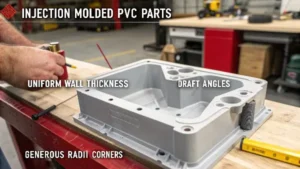
Evaluate PVC for construction components by balancing chemical resistance, durability, fire needs, weathering, impact, design, processing and compliance.

Evaluate PVC for construction components by balancing chemical resistance, durability, fire needs, weathering, impact, design, processing and compliance.
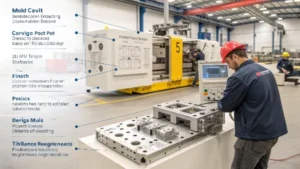
Optimize PVC injection molding parameters through thermal control, residence time, speed, pressure, venting, cooling, purge and validation.
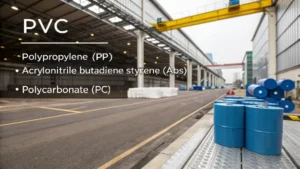
Compare rigid and flexible PVC for injection molding by examining plasticizers, stabilizers, hardness, heat sensitivity, chemicals, tooling and validation.
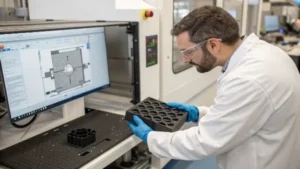
Optimize HDPE parts for water-management systems with guidance on pressure, creep, wall thickness, weld lines, sealing, UV, chemicals and molding.
Select nylon for automotive systems by comparing temperature, moisture, chemicals, impact, creep, weld lines, fiber orientation and validation needs.
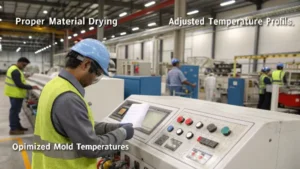
Evaluate bio-based nylon alternatives by comparing feedstock claims, performance, processing, supply, lifecycle boundaries, testing and change-control risk.

Control nylon molding quality with moisture management, process windows, mold temperature, fiber orientation, SPC, conditioning and traceability.
Master nylon overmolding with guidance on substrate compatibility, drying, interface design, fiber orientation, insert support, cooling and validation.
Compare nylon with POM, PC, PBT, PPS and other engineering thermoplastics using environment, load, moisture, friction, heat, process and cost criteria.
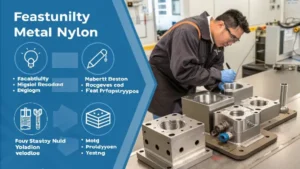
Evaluate a metal-to-nylon conversion using load cases, creep, temperature, moisture, chemicals, geometry, validation and total annual cost.
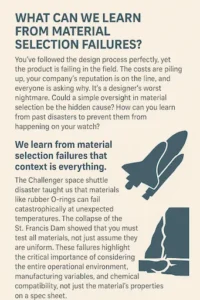
Use material-selection case studies as engineering evidence by separating requirements, variables, failure modes, transfer limits and validation steps.

Evaluate advanced engineering plastics by balancing thermal, mechanical, chemical, processing, tooling, supply and qualification requirements.
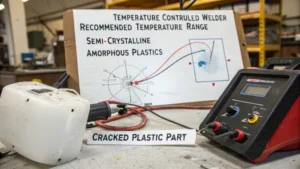
Understand temperature effects on plastics, including softening, creep, impact, thermal expansion, moisture, aging, molding conditions and test design.
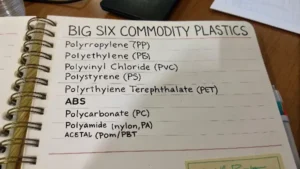
Choose an injection molding material with a requirements matrix covering environment, load, appearance, process, compliance, supply, cost and validation.
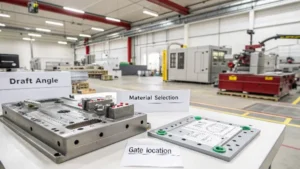
Learn how surface-finish engineering improves premium molded products through texture, polish, visual zones, secondary operations and inspection.
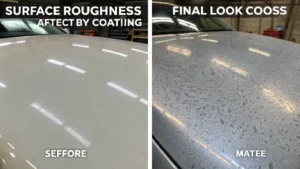
Understand how mold texture and polish influence paint, printing and plating through adhesion, release, draft, masking, gloss and inspection decisions.

Use a structured black-speck troubleshooting method with containment, evidence mapping, controlled tests, root-cause confirmation and corrective action.
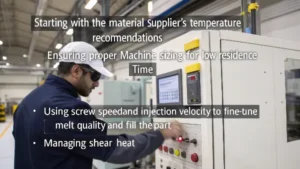
Prevent polymer degradation with controls for moisture, melt temperature, shear, residence time, back pressure, regrind, venting and shutdown.
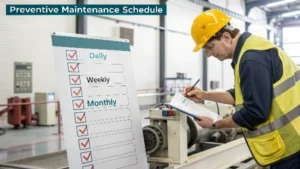
Build a maintenance program that reduces black specks by checking screw, barrel, non-return valve, nozzle, dead spots, wear, purge and verification.
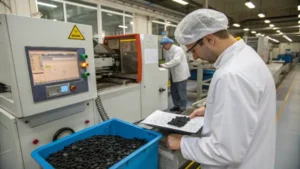
Prevent black specks before molding with controls for resin storage, drying, purging, hopper cleanliness, startup, dead spots, regrind and inspection.