Design
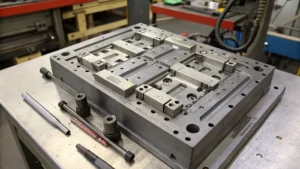
Injection Mold Sliders: Types, Design, Wear and Maintenance Guide
Learn how injection mold sliders create side actions for undercuts, including types, movement, locking, wear, lubrication, cooling and maintenance.

Learn how injection mold sliders create side actions for undercuts, including types, movement, locking, wear, lubrication, cooling and maintenance.
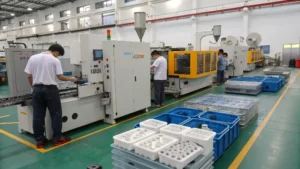
A production guide to thin-wall injection molding covering flow length, gate design, machine response, mold stiffness, cooling, material and quality.
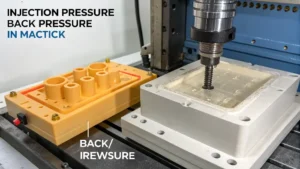
Understand injection pressure, pressure limits, cavity pressure, packing, machine settings, material flow and how to diagnose pressure-related defects.
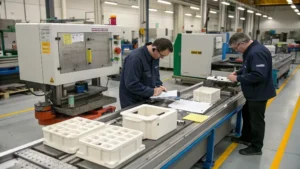
Use a structured root-cause method for injection mold defects by separating material, machine, mold, process, measurement and handling causes.
Understand how part contact with the core and cavity affects cooling, shrinkage, release, ejection, vacuum, texture, air and molded-part deformation.
Learn how metal and plastic insert molding combines structural, electrical, sealing and assembly functions through insert design, retention, thermal control and validation.
Compare insert molding with separate assembly by tooling, labor, components, quality, automation, volume, cycle, scrap and lifecycle cost.
Learn how to source custom injection molded parts in China by defining the RFQ, supplier capability, tooling, quality, logistics and total project risk.
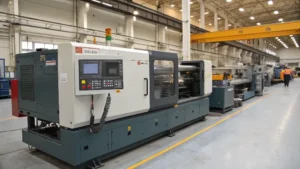
Understand what 180-ton means for a PET preform molding machine, including clamp force, injection unit, hot runner, drying, cooling, mold and output limits.
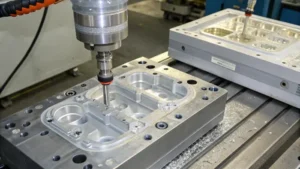
Understand an injection mold as connected feed, forming, venting, cooling, guidance, side-action and ejection systems—and review the interfaces that control quality.
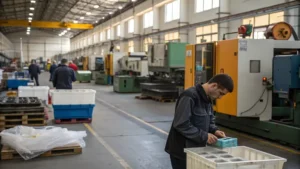
Evaluate a mold maker in China through project-specific DFM, tooling control, trial evidence, ownership, handover, logistics and total-scope comparison.
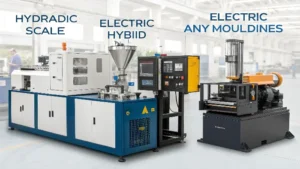
Choose an injection molding machine by shot size, clamp force, injection rate, pressure, tie-bar spacing, mold weight, control and auxiliary capability.
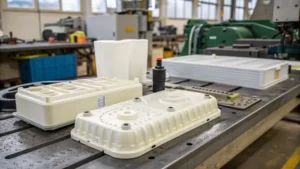
Diagnose and prevent flow lines in injection molding through gate placement, fill speed, temperature, wall transitions, venting, cooling and material control.
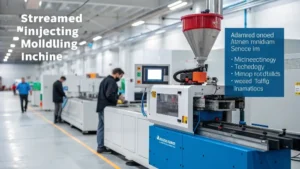
Reduce injection molding waste through part design, runner and gate choices, hot runners, cavity balance, process stability, maintenance and lifecycle planning.
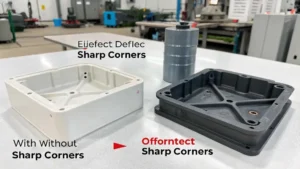
Understand precision molding services through functional tolerances, material behavior, mold accuracy, process capability, inspection and supplier evidence.
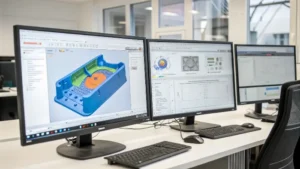
Understand how low-pressure molding analysis evaluates delicate components, encapsulation flow, temperature, air traps, adhesion, fixtures and validation.
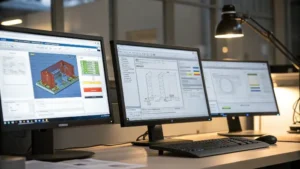
Turn mold flow analysis into tooling and production controls for gates, vents, cooling, machine capacity, cavity balance, CTQs, trials and process monitoring.
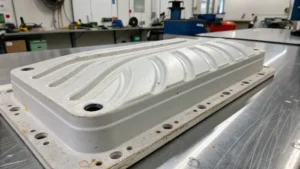
Use mold flow analysis efficiently by defining the question, improving inputs, comparing gates and cooling, interpreting risk and correlating trials.
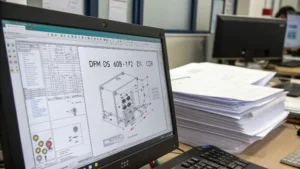
Learn how sheet metal DFM improves insert molded hardware through flat patterns, bends, holes, burrs, tolerances, locating features and encapsulation.
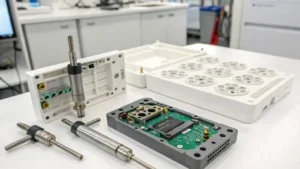
Validate insert molding through insert identity, retention, loading, sensing, sealing, preheat, flow loading, bond requirements, ejection and traceable trials.