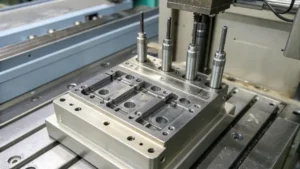
Injection Molding
How a Plastic Injection Molding Machine Works: A System View
Understand how a plastic injection molding machine works through the hopper, screw, barrel, clamping unit, mold, controls and quality loop.

Understand how a plastic injection molding machine works through the hopper, screw, barrel, clamping unit, mold, controls and quality loop.
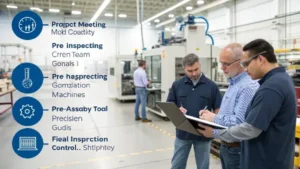
Follow the injection mold-making process from requirements and DFM through steel, machining, EDM, polishing, assembly, trials, validation and maintenance.
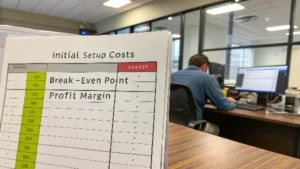
Learn why injection molding fits mass production through controlled cycle economics, repeatability, automation, material choice, quality and supply planning.
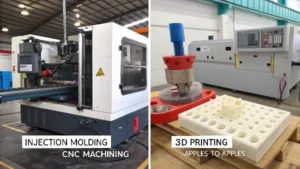
Review the main advantages and tradeoffs of injection molding, including speed, repeatability, material choice, tooling investment, automation and cost.
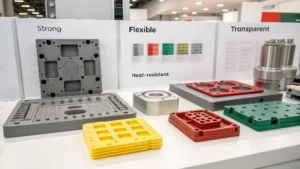
Plan molding capacity with validated cycle, active cavities, OEE losses, yield, changeovers, maintenance, downstream constraints, peaks and recovery.
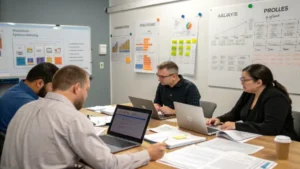
Improve high-volume molding ROI through tool amortization, cavity and cycle optimization, yield, automation, OEE, quality, maintenance and supply planning.
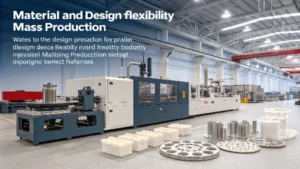
Choose injection molding by modeling tooling, unit cost, demand, design maturity, lead time, inventory and break-even against CNC, printing or casting.
Decide whether low-volume injection molding fits your project by comparing quantity, tooling, material, quality, lead time, part complexity and total cost.
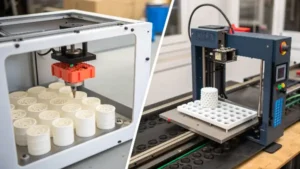
Use 3D-printed fixtures, nests, gauges and handling aids in injection molding by defining load, heat, accuracy, wear, calibration and revision-control limits.
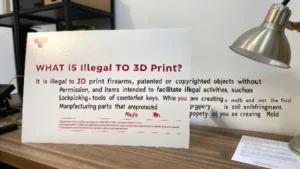
Learn what a desktop 3D printer can and cannot do for tiny injection-molded objects, including mold material, pressure, detail, ejection and safety.
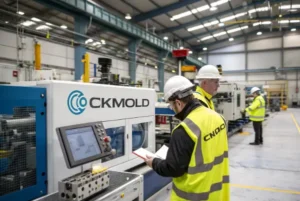
A practical B2B injection molding guide from product brief, material and DFM through tooling, machine fit, T1, quality, cost, ownership and production release.
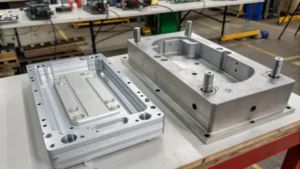
Decide whether 3D-printed injection molds fit low-run production by comparing volume, material, geometry, finish, cycle, risk and bridge-tooling economics.
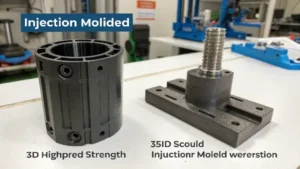
Use 3D printing across injection molding for prototypes, bridge tooling, conformal cooling, inserts, fixtures, patterns and process learning.
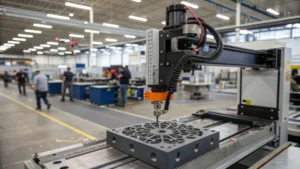
Understand when 3D-printed injection molds are practical, including printed cavity materials, ejector pins, pressure, heat, wear, cooling and safety.
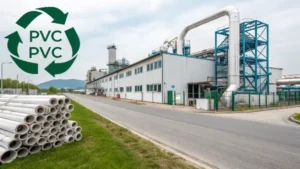
Evaluate sustainable PVC additives by comparing bio-based content, recycled content, stabilizers, plasticizers, migration, performance, LCA and supply risk.
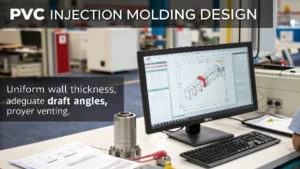
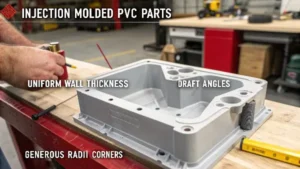
Improve PVC part design with guidelines for walls, radii, draft, gates, vents, weld lines, inserts, threads, stress and mold maintenance.
Evaluate PVC for construction components by balancing chemical resistance, durability, fire needs, weathering, impact, design, processing and compliance.
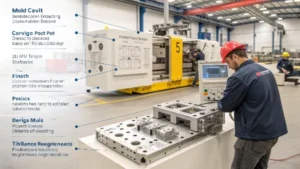
Optimize PVC injection molding parameters through thermal control, residence time, speed, pressure, venting, cooling, purge and validation.
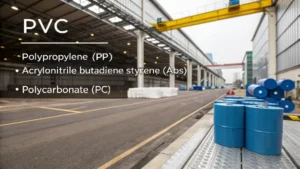
Compare rigid and flexible PVC for injection molding by examining plasticizers, stabilizers, hardness, heat sensitivity, chemicals, tooling and validation.
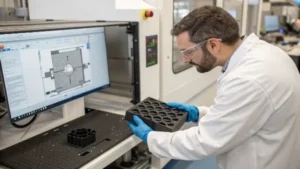
Optimize HDPE parts for water-management systems with guidance on pressure, creep, wall thickness, weld lines, sealing, UV, chemicals and molding.