Material
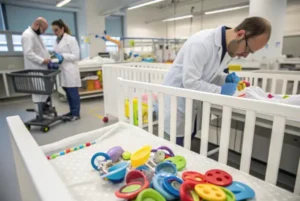
Testing Child-Safe PE Materials and Finished Products
Build a risk-based test plan for child-safe PE products covering formulation, chemical screening, abuse, small parts, aging and traceability.

Build a risk-based test plan for child-safe PE products covering formulation, chemical screening, abuse, small parts, aging and traceability.
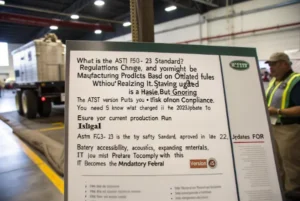
Plan compliance for polyethylene children’s products by market, age grading, hazards, material controls, testing, certification and production changes.
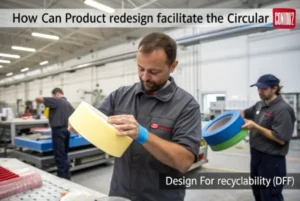
Build a practical circular economy strategy for PE waste using prevention, reuse, recyclable design, collection, recycling, procurement and traceable metrics.
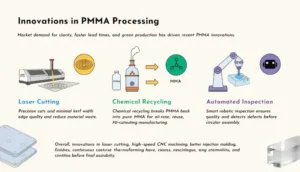
See how digital machining, optical tooling, process monitoring, joining and recycling technologies are changing acrylic and PMMA manufacturing.
Compare advanced polyethylene recycling technologies, from sorting and mechanical recovery to purification and thermal conversion, with practical limits.
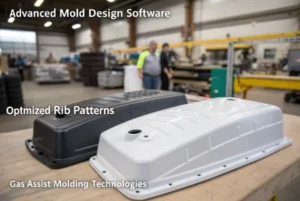
Explore lower-impact PE through recycled content, bio-based feedstocks, downgauging, reuse, design for recycling, traceability and lifecycle validation.
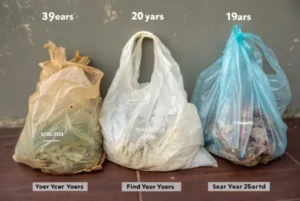
Evaluate biodegradable polyethylene claims through disposal conditions, testing, collection, recycling compatibility, fragmentation, lifecycle and evidence.
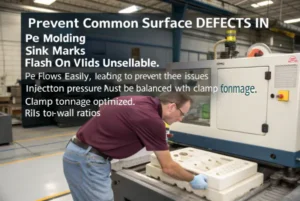
Optimize PE mold design through shrinkage, gates, cooling, vents, warpage control, ejection, cavity balance, maintenance and cycle economics.
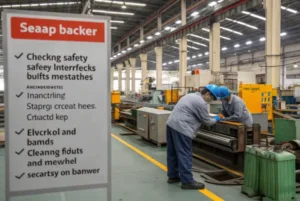
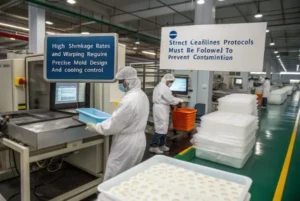
Control polyethylene injection molding through machine safety, material handling, thermal history, vents, process limits, maintenance, inspection and traceability.
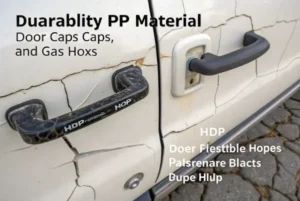
Compare HDPE and PP for automotive components by temperature, impact, creep, chemicals, hinges, stress cracking, molding, assembly and validation.
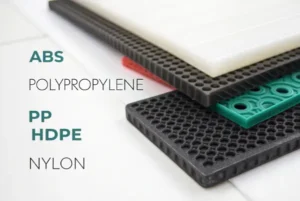
Evaluate polyethylene for automotive parts through impact, chemicals, temperature, creep, UV, stress cracking, molding, assembly and vehicle validation.
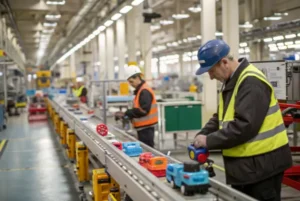
Manufacture safer PE toys through controlled materials, mold design, weld-line strength, assembly, abuse testing, hygiene, inspection and lot traceability.
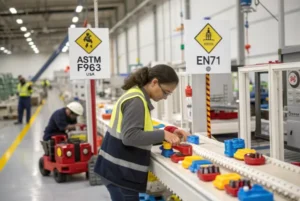
Assess polyethylene toy safety through age grading, mechanical hazards, exact resin and colorants, chemical limits, testing, certification and traceability.
Understand how medical polyethylene is qualified by contact, exact formulation, ISO 10993 risk assessment, manufacturing, sterilization and application testing.
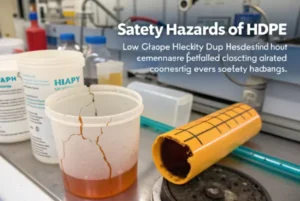
Assess HDPE for a medical-device component by exact resin grade, body contact, sterilization, processing, aging, biocompatibility and device risk.
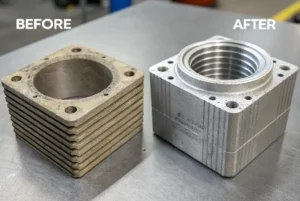
Create stronger, more useful FDM prototypes through print orientation, layer direction, walls, infill, heat, fasteners, post-processing and testing.
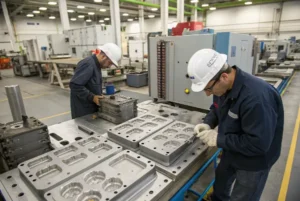
Evaluate PVC material innovations through stabilizers, modifiers, plasticizers, recycled or bio-content, processing, durability, supply and claims.
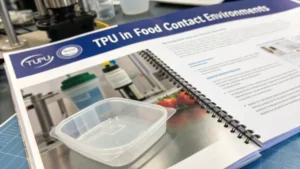
Evaluate TPU for food-contact parts through exact-grade selection, additives, intended use, migration, hygiene, processing, traceability and market documentation.
Evaluate sustainable PVC additives by comparing bio-based content, recycled content, stabilizers, plasticizers, migration, performance, LCA and supply risk.
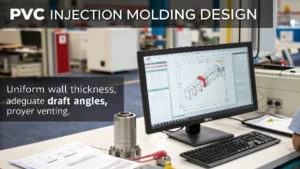
Improve PVC part design with guidelines for walls, radii, draft, gates, vents, weld lines, inserts, threads, stress and mold maintenance.